Wagon diecast models represent one of the most practical and distinctive automobile body styles ever produced. Characterized by an extended roofline and a rear cargo area accessible through a tailgate or rear doors, station wagons were designed to combine passenger seating with useful cargo capacity. Over the decades, the wagon evolved from a utilitarian vehicle associated with transportation and rural travel into everything from a family car and luxury vehicle to a high-performance and collectible automotive icon.
At DiecastModelsWholesale.com, the Wagon category brings together scale models representing different eras, manufacturers, and interpretations of the wagon body style. Collectors can find classic American station wagons, European estate cars, Japanese wagons, performance wagons, vintage family vehicles, and other vehicles with wagon-style bodies. Depending on the subject and manufacturer, models may be available in popular scales such as 1/18, 1/24, 1/43, 1/64, and other scales.
Wagons are particularly interesting collectibles because they connect automotive practicality with distinctive styling. A classic 1950s American station wagon, a 1970s family wagon, a Volvo estate, and a modern performance wagon can all have very different appearances while sharing the same basic idea: provide passengers with additional enclosed cargo space without moving into a larger truck or SUV.
What Is a Station Wagon?
A station wagon, often simply called a wagon, is an automobile with an extended roof over the passenger and cargo area and a rear opening for loading luggage or other goods. Unlike a traditional sedan, which has a separate trunk, a wagon provides a larger and more accessible cargo compartment integrated into the passenger cabin.
The body style developed from earlier vehicles used to transport people and luggage between railway stations and nearby destinations. Over time, the concept evolved into purpose-built automobiles used by families, businesses, travelers, and enthusiasts.
Wagons have appeared in many configurations, including:
- Two-door station wagons
- Four-door station wagons
- Full-size American wagons
- Compact wagons
- European estate cars
- Japanese station wagons
- Luxury wagons
- Performance wagons
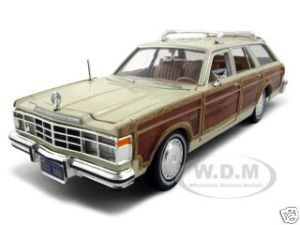
- Wood-bodied and wood-look wagons
- Classic family wagons
- Police and service wagons
- Custom and modified wagons
This range gives collectors many ways to approach wagon diecast models, whether they are interested in automotive history, family cars, classic American vehicles, European automobiles, or performance cars.
The Early History of the Wagon
The station wagon's name is closely associated with railway transportation. Early "depot hacks" or station wagons were used to transport passengers and luggage between railway stations and hotels or other destinations.
As automobiles became more widespread during the early 20th century, manufacturers and coachbuilders began adapting the idea to motor vehicles. Early wagons often used commercial or utility-oriented construction, with larger bodies designed to carry people and equipment.
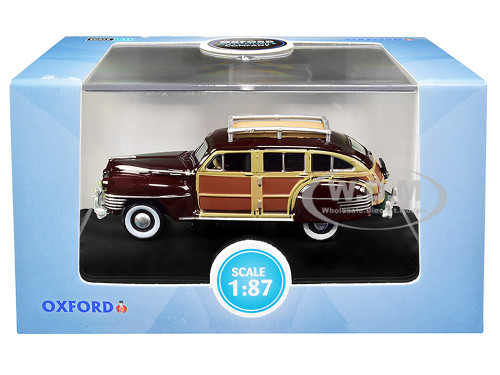
Wood was commonly used in early station wagon construction, helping establish the visual identity of the classic woodie wagon. These vehicles were practical but also reflected the craftsmanship of the coachbuilding era.
As automotive manufacturing became increasingly standardized, manufacturers began producing station wagons as regular factory models rather than relying exclusively on specialized body builders.
The Rise of the American Station Wagon
Station wagons became especially important in the United States during the middle of the 20th century. Growing suburban communities, expanding highway networks, and larger families created demand for vehicles capable of carrying several passengers along with luggage, groceries, sports equipment, and other cargo.
American manufacturers offered station wagons across a wide range of sizes and price levels. Full-size wagons from Ford, Chevrolet, Pontiac, Oldsmobile, Buick, Mercury, Plymouth, Dodge, and other manufacturers could have three rows of seating and substantial cargo capacity.
The design of these vehicles also changed dramatically over the decades.
1950s Wagons
The 1950s produced some of the most recognizable American station wagon designs. Large bodies, extensive chrome trim, tailfins, two-tone paint schemes, and wraparound glass created distinctive styling.
Wood-paneled and simulated-wood wagons became particularly associated with the period.
For diecast collectors, these vehicles are appealing because their body shapes, trim, colors, and details provide an unmistakable snapshot of 1950s American automotive design.
1960s and 1970s Wagons
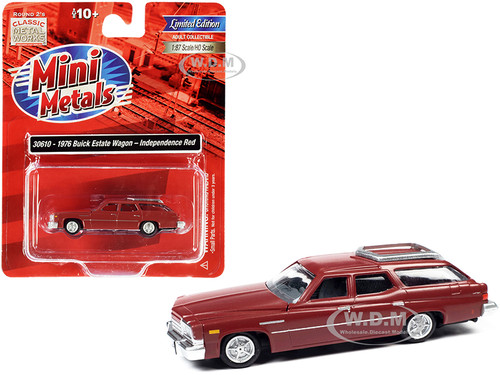
During the 1960s and 1970s, station wagons remained important family vehicles. Full-size wagons could offer three rows of seating, large engines, roof racks, and substantial cargo areas.
The period also produced a number of memorable performance-oriented wagons and muscle-era derivatives. Some were closely related to the same platforms used for popular sedans and muscle cars.
This creates interesting collecting opportunities for enthusiasts who want to compare a manufacturer's wagon with the corresponding sedan, coupe, or performance model.
1980s and 1990s Wagons
Later American wagons generally became smaller and more fuel-efficient, while European and Japanese manufacturers continued developing wagons as important parts of their product ranges.
Vehicles such as the Volvo 240 became strongly associated with the practical and durable image of the wagon, while other manufacturers developed sportier and more luxurious versions.
European Estate Cars
Outside the United States, the wagon is often known as an estate car or simply an estate.
European manufacturers developed a wide range of estate vehicles, from compact family cars to luxury performance models. Volvo, Mercedes-Benz, BMW, Audi, Volkswagen, Peugeot, and other manufacturers have produced wagons across multiple generations.
European estate cars are particularly interesting to collectors because they demonstrate how the wagon body style evolved in markets where vehicle size, fuel economy, practicality, and road conditions often influenced automotive design differently from the American market.
Some European wagons became famous for their understated appearance and practical engineering, while others developed into serious performance vehicles.
Performance Wagon Diecast Models
One of the most interesting developments in wagon history is the transformation of the practical family car into a performance automobile.
Manufacturers began combining wagon body styles with powerful engines, sport suspension, upgraded brakes, and performance-oriented drivetrains. The result was a vehicle capable of carrying passengers and cargo while delivering performance comparable to some sports sedans.
Performance wagons can include subjects from BMW M, Mercedes-AMG, Audi RS, Volvo, Subaru, and other manufacturers.
For collectors, these models offer an interesting contrast between appearance and performance. A wagon may look relatively understated while incorporating the mechanical components of a high-performance automobile.
Japanese Wagon Models
Japanese manufacturers have also produced a wide variety of wagon and estate vehicles.
Compact wagons became popular for their combination of passenger space, cargo capacity, maneuverability, and fuel efficiency. Subaru became particularly associated with all-wheel-drive wagons, while manufacturers such as Toyota, Nissan, Honda, Mazda, and Mitsubishi produced various wagon models over the years.
Japanese wagons can be especially interesting for collectors interested in JDM vehicles and 1980s, 1990s, and 2000s automotive culture.
Performance-oriented Japanese wagons also provide another avenue for collecting, particularly among enthusiasts interested in turbocharged engines, all-wheel drive, rally connections, and modified vehicles.
Wagon Diecast Models and Automotive History
A wagon model can represent much more than a particular body style. It can preserve a snapshot of how people used automobiles during a specific period.
A 1950s wagon might represent the growth of suburban family transportation. A 1960s or 1970s wagon can reflect the era of large American family cars. A 1980s Volvo or Subaru wagon can illustrate the emphasis on practicality and durability. A modern European performance wagon demonstrates how the same basic body configuration can be adapted to high-performance driving.
Collectors can therefore build a wagon collection chronologically and use different models to show how automotive design, technology, and consumer preferences changed over time.
Popular Wagon Manufacturers
Wagon collectors can organize their collections around manufacturers, countries, eras, or individual vehicle families.
Important wagon subjects include manufacturers such as:
- Ford
- Chevrolet
- Pontiac
- Buick
- Oldsmobile
- Dodge
- Plymouth
- Mercury
- Volvo
- Mercedes-Benz
- BMW
- Audi
- Volkswagen
- Subaru
- Toyota
- Nissan
- Honda
- Mazda
- Mitsubishi
A manufacturer-focused collection can be especially rewarding because many companies produced wagons alongside sedans, coupes, pickups, and SUVs. This allows collectors to compare different body styles built from the same automotive platforms.
Scales of Wagon Diecast Models
Wagons are available in several popular diecast scales.
1/18 scale provides a larger display format and is well suited to detailed classic, European, and performance wagon models. The larger size allows manufacturers to reproduce body lines, interior details, wheels, trim, and other features more prominently.
1/24 scale offers a balance between display presence and shelf space and has long been popular for classic and modern automobile models.
1/43 scale is especially useful for collectors building collections around vehicle history, manufacturers, or multiple generations because the models require relatively little display space.
1/64 scale provides a compact format that makes it possible to collect many wagon subjects. Classic American station wagons, European estates, Japanese wagons, movie vehicles, and custom subjects can all work well at this scale.
Other scales may be available depending on the specific vehicle and manufacturer.
When collecting several wagons, keeping the models in a consistent scale can create a cohesive display. Alternatively, collectors may choose a larger scale for favorite vehicles and smaller scales for broader historical collections.
What Collectors Look for in Wagon Models
Station wagons can contain many distinctive details that collectors may want to compare.
Important features include:
- Body style and number of doors
- Roof length and profile
- Tailgate design
- Rear windows
- Roof racks
- Woodgrain panels
- Wheels and tires
- Chrome trim
- Grilles and headlights
- Interior seating
- Third-row seating
- Period-correct colors
- Manufacturer badges
- Performance equipment
- Factory or aftermarket graphics
The rear cargo area is one of the features that separates a wagon from a sedan, and accurately reproduced tailgates, rear windows, rooflines, and cargo areas can be particularly important to collectors.
Building a Wagon Collection
There are many ways to organize a wagon diecast collection.
A classic American collection could focus on woodies and full-size station wagons from the 1950s through the 1970s. A European collection could include Volvo, Mercedes-Benz, BMW, Audi, and Volkswagen estates. A JDM collection could focus on Japanese wagons from the 1980s through the 2000s.
Another option is to collect wagons based on their relationship to other vehicles. A wagon can be displayed alongside the corresponding sedan or coupe, creating a small automotive family. Performance wagons can be grouped with sports cars, while vintage family wagons can complement classic cars and pickups.
Wagons can also work well in movie and television collections, where familiar family cars and customized vehicles often become part of the story.
Start Collecting Wagon Diecast Models
From elegant European estates and practical Japanese wagons to classic American station wagons, woodies, family cars, and high-performance estates, wagon diecast models represent one of the most versatile automobile body styles in scale.
Browse the Wagon category at DiecastModelsWholesale.com to explore classic and modern wagon models, compare manufacturers and scales, and find vehicles that add automotive history, variety, and character to your collection.

 $139.99




 $23.99Was $28.99Save 17%
 $23.99Was $28.99Save 17%
 $23.99Was $28.99Save 17%

 $23.99Was $28.99Save 17%
 $23.99Was $28.99Save 17%