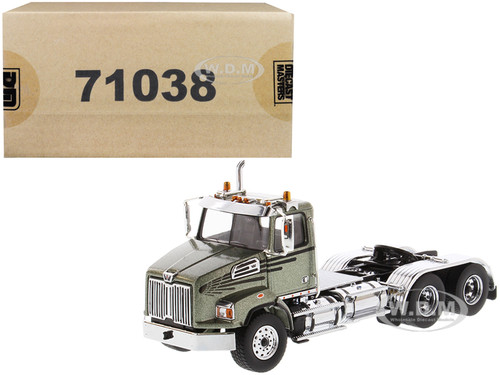
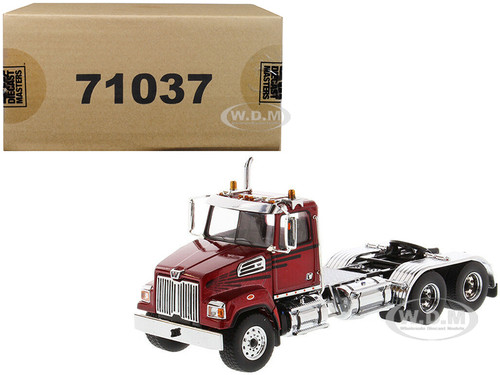
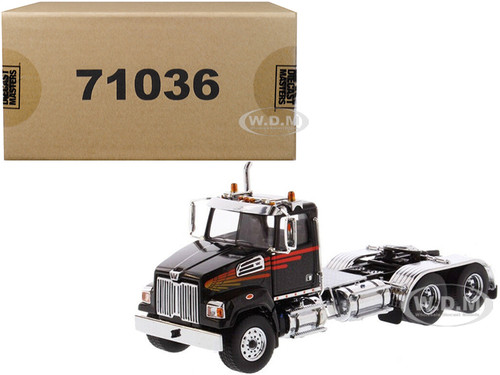
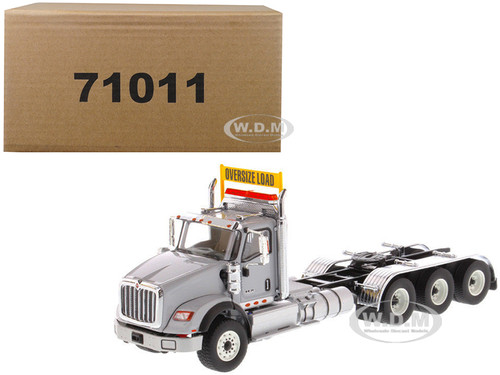
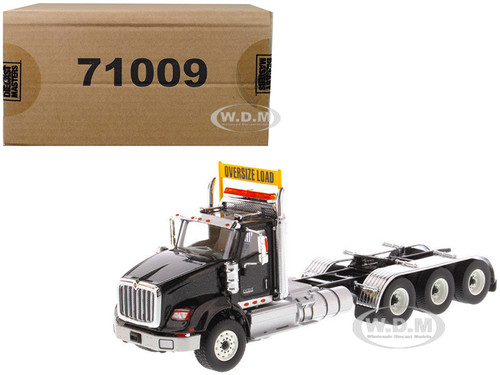
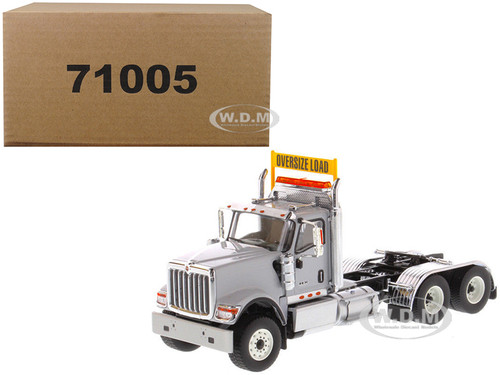
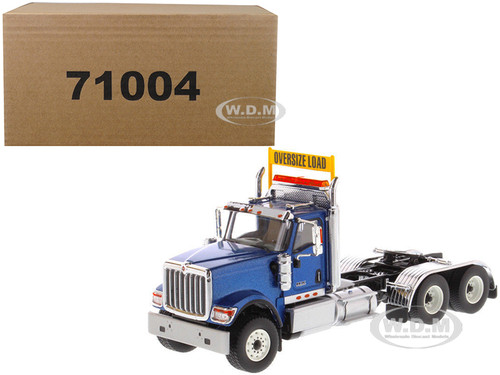
Day cab diecast models represent an important class of commercial trucks designed for operations where the driver returns to a home base rather than needing an onboard sleeping compartment. A day cab truck has a cab without a built-in sleeper berth behind the driver's seat, giving the vehicle a shorter overall configuration and making it particularly useful for local, regional, vocational, and specialized transportation.
The Day Cab category at DiecastModelsWholesale.com is designed for collectors interested in commercial trucks, heavy-duty tractors, vocational vehicles, and detailed scale replicas. Depending on the product, shoppers may find day cab tractors, heavy-duty work trucks, car carriers, dump and specialty trucks, and other commercial configurations based on recognizable truck platforms.
Day cabs are not limited to one class of truck. Modern manufacturers offer day-cab configurations across medium-duty, severe-duty, and Class 8 vehicles. Freightliner, for example, offers day-cab versions of both the M2 and Cascadia, while Peterbilt offers day-cab configurations of models including the 389, 567, and 589.
What Is a Day Cab Truck?
A day cab is a truck cab designed without a sleeper compartment. The space behind the driver is generally kept compact, allowing the truck to have a shorter wheelbase or more usable chassis space for a particular body or trailer configuration.
The key difference is between a day cab and a sleeper cab:
- Day cab: No sleeping compartment behind the driver's seating area.
- Sleeper cab: Includes a dedicated sleeping compartment for overnight or extended trips.
- Extended or crew cab: Provides additional passenger space rather than a sleeping berth.
The absence of a sleeper does not mean a day cab is necessarily a small truck. Heavy-duty Class 8 tractors can be configured as day cabs, and manufacturers also offer day-cab versions of vocational trucks designed for demanding applications. Freightliner's Cascadia, for example, is available with dedicated day-cab configurations alongside several sleeper options.
Why Are Day Cab Trucks Used?
Day cab trucks are particularly well suited to operations where a truck begins and ends its working day at the same location. Removing the sleeper can reduce the overall length of the vehicle and provide a configuration better suited to local routes, frequent maneuvering, and vocational work.
Typical applications include:
- Local freight transportation
- Regional hauling
- Construction
- Dump and bulk hauling
- Car carriers
- Utility work
- Municipal operations
- Equipment transportation
- Port and terminal operations
- Distribution and delivery
- Short-haul tractor-trailer work
Freightliner specifically describes day-cab configurations for applications such as utility work and bulk hauling, while Peterbilt has developed specialized day-cab configurations for applications including car carriers.
Day Cab vs. Sleeper Cab
The distinction between these two configurations is one of the most important considerations for truck collectors.
Day Cab
A day cab has a compact rear cab profile and no sleeping compartment. The shorter configuration can be advantageous for maneuverability and applications where overnight accommodation is unnecessary.
Sleeper Cab
A sleeper cab extends behind the driver compartment and provides a sleeping area. Long-haul tractor-trailers commonly use sleeper configurations because drivers may spend extended periods away from their home terminal.
A single truck model can sometimes be offered in both configurations. Peterbilt's Model 589, for example, can be ordered as either a day cab or a sleeper with several sleeper sizes.
For collectors, this distinction creates an interesting opportunity to compare different versions of the same truck. A day-cab Peterbilt and a sleeper-equipped Peterbilt can have noticeably different proportions even when they share the same basic cab and chassis design.
History and Development of Day Cab Trucks
Day cabs developed alongside the broader evolution of commercial trucking. Early motor trucks were generally used for relatively short-distance transportation because road infrastructure, vehicle reliability, and freight networks had not yet reached the scale associated with modern long-haul trucking.
As trucking expanded, manufacturers developed increasingly specialized configurations for different operating conditions. The growth of highways and long-distance freight created greater demand for sleeper-equipped tractors, while local and regional transportation continued to favor shorter configurations.
The day cab remained important because many commercial operations simply did not require a sleeping compartment. Construction sites, distribution centers, terminals, local freight routes, and vocational fleets often benefit from a truck configured specifically for daytime operation.
Modern truck manufacturers continue to offer day cabs alongside sleeper configurations rather than treating them as a separate type of truck. This demonstrates how the cab configuration is primarily a matter of application and intended use.
Day Cab Trucks in Vocational Applications
One of the most interesting aspects of day-cab collecting is the relationship between the cab and the body or equipment installed behind it.
A day-cab chassis can serve as the foundation for many specialized vehicles.
Construction Trucks
Construction fleets frequently use day-cab trucks because they operate within defined work areas or regional routes. Depending on the chassis and body, a day cab can become a dump truck, mixer, crane truck, equipment hauler, or other construction vehicle.
Car Carriers
Day-cab tractors are also used in vehicle transportation. Peterbilt introduced a Model 567 UltraLow Roof Day Cab specifically for car-carrier applications, emphasizing a low-profile design and visibility suited to that specialized work.
Utility Trucks
Utility companies use day-cab chassis for specialized equipment such as service bodies, aerial equipment, utility bodies, and other work configurations. Freightliner lists day cabs among the available configurations for its utility trucks.
Bulk Hauling
Day-cab tractors can also be configured for regional bulk-hauling applications. Freightliner currently identifies its Cascadia day cab as an option for bulk-haul operations.
Features to Look for in Day Cab Diecast Models
Because the cab is the defining characteristic, collectors should pay particular attention to the area behind the driver's compartment.
Cab Design
The shape of the roof, rear wall, windows, doors, hood, grille, mirrors, and bumper can identify a particular truck generation or model.
Chassis and Axles
Commercial truck models can have different axle arrangements depending on their intended application. A day-cab tractor may have a conventional tandem-drive configuration, while a vocational truck can have specialized axle arrangements designed for its body and operating environment.
Fifth Wheel
On day-cab tractor models, the fifth wheel is an important detail because it connects the tractor to a semi-trailer. Collectors building tractor-and-trailer combinations should pay attention to fifth-wheel position and compatibility.
Body or Equipment
A day cab may be represented as a tractor, dump truck, car carrier, crane truck, utility truck, or another specialized vehicle. The equipment behind the cab can therefore be just as important as the cab itself.
Interior
Even though a day cab lacks a sleeping compartment, the cab interior can still include seats, dashboard details, steering wheel, controls, and other features that add realism.
Day Cab Diecast Models for Collectors
Day cab models have strong appeal for collectors interested in commercial trucking and vocational equipment. They represent the trucks that perform much of the everyday work of moving goods and supporting industries.
A day-cab tractor can also serve as the foundation of a larger transportation display. Pairing it with an appropriate trailer creates a complete tractor-trailer combination, while specialized day-cab models can be displayed alongside construction equipment, utility trucks, and other commercial vehicles.
Collectors may organize their collections around:
- Truck manufacturer
- Truck model
- Scale
- Era
- Application
- Axle configuration
- Cab style
- Trailer type
- Company or fleet livery
- Vocational specialty
Popular Day Cab Truck Manufacturers
Major North American truck manufacturers offer day-cab configurations across multiple vehicle classes.
Peterbilt is particularly well known among collectors for its distinctive conventional trucks. Current models such as the 389 and 589 can be configured as day cabs, while the Model 567 is associated with vocational and specialized applications.
Freightliner offers day-cab versions of trucks ranging from the medium-duty M2 to the Class 8 Cascadia and severe-duty models.
Other manufacturers represented in the broader commercial-truck market include Kenworth, International, Mack, Volvo, Western Star, and Ford, with particular models and configurations varying by application and production era.
For collectors, manufacturer identity can be particularly important because grille shapes, hood profiles, cab proportions, lighting, and other styling details often make one truck brand immediately recognizable.
Day Cab Diecast Scales
Commercial truck models are produced in several scales, and the best choice depends on the collector's available space and existing collection.
1/18 Scale
Large-scale commercial models can provide substantial visibility and room for detailed interiors, chassis components, and exterior equipment. They are well suited to collectors who prefer individual display pieces.
1/32 Scale
1/32 scale provides a useful balance between physical size and detail. It is particularly effective for collectors who want to display trucks alongside other commercial and construction vehicles.
1/43 Scale
1/43 is a popular scale for road vehicles and commercial subjects. Day-cab models in this scale can be combined with cars, buses, delivery trucks, and other transportation subjects.
1/50 Scale
1/50 scale is particularly important for commercial trucks and construction equipment. It offers enough size for detailed cab, chassis, wheel, and equipment features while remaining practical for a larger collection.
1/64 Scale
1/64 allows collectors to build substantial fleets using relatively little display space. Day-cab tractors and vocational trucks can be especially effective when several different truck configurations are displayed together.
The actual scales available depend on the manufacturer and individual model.
Day Cab Trucks and Trailers
A day-cab tractor becomes even more interesting when paired with a compatible trailer. Collectors can create combinations representing dry vans, flatbeds, lowboys, car carriers, tank trailers, refrigerated trailers, and other freight equipment.
The short cab configuration can also make a tractor-and-trailer combination look different from the same tractor equipped with a sleeper. Collectors interested in commercial transportation can therefore use day-cab models to create a more diverse fleet.
Day Cab Models in Truck Collections
Day cabs are an excellent way to expand a collection beyond conventional long-haul sleeper tractors. A collection might include a long-hood Peterbilt sleeper alongside a Peterbilt day cab, a Freightliner Cascadia day cab, a vocational truck, and several specialized tractor-trailer combinations.
This approach highlights how the same basic truck industry serves very different transportation needs.
Collectors can also compare older and newer day-cab designs. Changes in aerodynamic styling, grille design, lighting, mirrors, cab construction, chassis layouts, and safety equipment can make different generations visually distinctive.
Choosing a Day Cab Diecast Model
When choosing a day cab diecast model, consider scale, manufacturer, truck model, configuration, application, and display compatibility.
If you already collect commercial trucks, matching the scale is usually the easiest way to create a cohesive display. If you are interested in a particular manufacturer, look for models that accurately reproduce the distinctive cab and chassis characteristics of that brand.
For collectors interested in realism, pay attention to details such as the fifth wheel, wheel configuration, mirrors, exhaust system, fuel tanks, cab interior, chassis, and any specialized body or equipment.
Collect Day Cab Truck Models
Day cab trucks represent the practical side of the trucking industry: local freight, construction, utility work, regional hauling, car transportation, and countless other applications where a sleeper compartment is unnecessary.
Their shorter cab configuration also gives them a distinctive appearance that makes them valuable additions to commercial truck collections. Whether you prefer classic conventional trucks, modern aerodynamic tractors, vocational equipment, or detailed tractor-and-trailer combinations, day cab diecast models provide an opportunity to explore another important part of trucking history and equipment design.
Browse the Day Cab category at DiecastModelsWholesale.com to find scale day cab trucks and commercial vehicle models for your collection, and discover a truck configuration that fits your preferred manufacturer, scale, era, or transportation theme.



 $43.99Was $49.49Save 11%