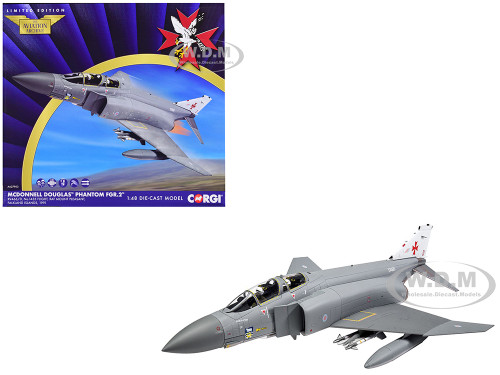
The Falklands War category at DiecastModelsWholesale.com features military diecast models and scale representations associated with the 1982 conflict between the United Kingdom and Argentina over the Falkland Islands. For collectors, the Falklands War is a particularly interesting subject because the campaign combined naval operations, carrier aviation, long-range air missions, helicopters, amphibious landings, armored vehicles, artillery, and infantry combat in an isolated South Atlantic environment.
The conflict lasted 74 days, beginning with the Argentine invasion of the Falkland Islands on April 2, 1982, and ending with the Argentine surrender on June 14. British forces assembled a large task force and sailed thousands of miles south to retake the islands. The campaign produced a distinctive collection of military subjects that are well suited to aviation collections, naval displays, British military collections, and historical dioramas.
Shoppers browsing Falklands War models can find subjects associated with both sides of the conflict, including British Royal Navy and Royal Air Force aircraft, Royal Army and Royal Marines equipment, Argentine aircraft and military vehicles, helicopters, ships, and other equipment connected with the campaign.
The Falklands War of 1982
The Falkland Islands are located in the South Atlantic, roughly 300 miles from the coast of Argentina. Sovereignty over the islands had been disputed for generations, and on April 2, 1982, Argentine forces invaded and occupied the islands.
The British government responded by assembling a task force to retake the territory. The force included Royal Navy warships, Royal Fleet Auxiliary vessels, aircraft carriers, Royal Marines, Army units, special forces, and supporting personnel. The distance from Britain presented an enormous logistical challenge, with the campaign being conducted thousands of miles from the United Kingdom.
The British land campaign began with landings around San Carlos Water on May 21, 1982. After fighting at Darwin and Goose Green, British forces advanced across East Falkland toward Stanley. Major battles followed at locations including Mount Longdon, Two Sisters, Mount Harriet, Mount Tumbledown, and Wireless Ridge. Argentine forces in Stanley surrendered on June 14.
The war had a significant human cost on both sides, making Falklands War collecting an important way to study and remember a major modern military campaign rather than simply a collection of military vehicles.
British Falklands War Aircraft
Aircraft are among the most recognizable subjects associated with the Falklands War. British air operations were conducted from aircraft carriers and from locations supporting the task force, while Argentine aircraft operated from mainland bases and airfields on the islands.
Sea Harrier
The BAE Sea Harrier became one of the defining aircraft of the Falklands War. Operated by the Royal Navy's Fleet Air Arm, the Sea Harrier combined fighter and attack capabilities with vertical or short takeoff and landing characteristics that made it particularly valuable for carrier operations.
The aircraft operated from carriers including HMS Hermes and HMS Invincible, providing air defense for the task force as well as conducting attacks against targets on the islands.
For collectors, a Falklands-era Sea Harrier is one of the most recognizable subjects for a British aviation display.
Harrier GR.3
The RAF also deployed Harrier GR.3 aircraft during the campaign. Several RAF Harrier GR.3s were transported south aboard the Atlantic Conveyor and subsequently operated from HMS Hermes. Their ability to conduct operations without conventional runways was particularly important in the South Atlantic environment.
Together, the Sea Harrier and Harrier GR.3 represent two closely related but distinct aspects of British air operations during the conflict.
Vulcan Bomber
The Avro Vulcan represents another remarkable aspect of the Falklands campaign. RAF Vulcan bombers participated in extremely long-range missions from Ascension Island against targets at Port Stanley.
These missions demonstrated the extraordinary distances involved in supporting British forces in the South Atlantic and remain an important part of Falklands War aviation history.
Argentine Aircraft
Argentine aviation provides another important side of Falklands War collecting. The Argentine Air Force and Argentine Navy operated aircraft from mainland bases and contributed heavily to the air campaign.
A-4 Skyhawk
The Douglas A-4 Skyhawk was one of the most important Argentine strike aircraft during the conflict. Argentine A-4s conducted attacks against British ships and ground positions and operated in a challenging environment characterized by long distances, limited warning time, and intense air and naval defenses.
Dassault Super Étendard
The Argentine Navy's Super Étendard became particularly famous because of its use with the AM39 Exocet anti-ship missile. The combination demonstrated the threat posed by modern anti-ship weapons to naval forces operating near the islands.
IA-58 Pucará
The Argentine IA-58 Pucará was a twin-engine turboprop attack aircraft designed for close air support and operations in rugged environments. Several Pucarás operated from Falkland Islands airfields during the conflict.
The type is particularly interesting to collectors because it was a locally developed Argentine aircraft rather than an imported fighter or bomber. Images of Pucarás also became closely associated with the ground campaign around Goose Green.
Other Argentine Aircraft
Other aircraft associated with the conflict include the Mirage III, IAI Dagger, Canberra bomber, and various transport and support aircraft.
Together, these aircraft create opportunities for collectors to build displays showing both sides of the air war rather than focusing exclusively on British equipment.
Helicopters in the Falklands
Helicopters were indispensable to British operations. The Falklands presented difficult terrain, few roads, long distances between operational areas, and challenging weather. Helicopters provided transportation, reconnaissance, casualty evacuation, resupply, and other essential capabilities.
Sea King
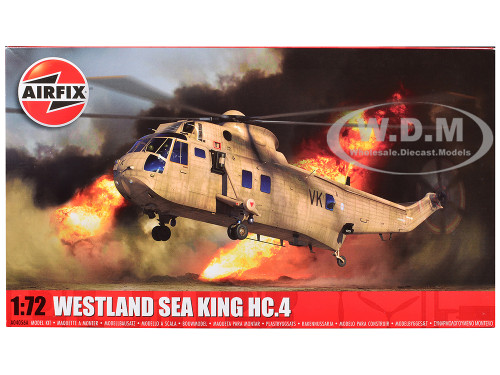
The Westland Sea King was one of the most important British helicopters of the campaign. Sea Kings performed a wide range of missions and became especially important after the loss of other heavy-lift capabilities.
The helicopter's size and distinctive rotor arrangement make Sea King models particularly recognizable in a Falklands collection.
Wessex and Other Helicopters
The Westland Wessex was also extensively used for transport and support duties. Other helicopters associated with the campaign included the Westland Gazelle and Scout.
The loss of the Atlantic Conveyor on May 25 had a major effect on British helicopter support because the ship was carrying important aviation assets, including Chinook helicopters. Only one heavy-lift Chinook remained operational after the ship was struck.
British Military Vehicles and Equipment
Although the Falklands War is often remembered for its aircraft and naval battles, ground forces relied on a wide range of vehicles and equipment.
British forces deployed FV101 Scorpion and FV107 Scimitar light armored reconnaissance vehicles, Land Rovers, trucks, artillery, and other support equipment. The Scorpion and Scimitar were particularly suited to reconnaissance and armored support in difficult terrain where heavier vehicles were less practical.
Artillery was also important during the ground campaign. British 105 mm light guns provided fire support during battles such as Goose Green and the final fighting around Stanley.
Military vehicle models can therefore complement aircraft models and help create a more complete representation of British operations on East Falkland.
Royal Navy and Naval Subjects
The Falklands campaign was fundamentally dependent on naval power. The British task force transported troops and supplies over thousands of miles and provided air defense, naval gunfire, logistics, aviation support, and amphibious capabilities.
Important British naval subjects associated with the conflict include:
- HMS Hermes
- HMS Invincible
- HMS Sheffield
- HMS Coventry
- HMS Ardent
- HMS Antelope
- HMS Glamorgan
- Atlantic Conveyor
- Royal Fleet Auxiliary ships
- Landing ships and support vessels
The loss of several British ships to Argentine air attacks demonstrated the vulnerability of surface vessels operating within range of land-based aircraft. HMS Ardent and HMS Antelope were among the British ships lost during the campaign.
For collectors interested in naval history, Falklands War models can provide an important connection between warship collecting and military aviation.
Key Battles and Locations
Falklands War models can also be organized around the major stages of the campaign.
San Carlos
The British landings at San Carlos Water established the principal beachhead on East Falkland. The area became known as "Bomb Alley" because Argentine aircraft repeatedly attacked British ships and landing forces.
Goose Green and Darwin
The Battle of Goose Green was the first major land battle following the British landings. The 2nd Battalion, The Parachute Regiment fought a difficult battle against an Argentine garrison, eventually securing the settlement and airfield area.
Mount Longdon and the Stanley Battles
The final phase of the campaign involved a series of attacks against Argentine defensive positions surrounding Stanley. Mount Longdon, Two Sisters, Mount Harriet, Mount Tumbledown, and Wireless Ridge were among the important objectives.
The fighting culminated in the Argentine surrender at Stanley on June 14, 1982.
These locations can provide useful themes for collectors building historical displays or dioramas.
Collecting Falklands War Diecast Models
The Falklands War is particularly well suited to thematic collecting because the conflict involved a relatively concentrated group of recognizable vehicles and aircraft.
Collectors may choose to focus on:
- British Royal Navy aircraft
- RAF Falklands aircraft
- Argentine Air Force aircraft
- Argentine Navy aircraft
- British Army vehicles
- Royal Marines equipment
- Falklands War helicopters
- British warships
- Argentine military subjects
- South Atlantic naval aviation
- Specific battles or campaign stages
A collection can also be organized chronologically, beginning with the Argentine invasion, continuing through the British task force deployment and San Carlos landings, and concluding with the final battles around Stanley.
Choosing the Right Scale
Scale is an important consideration when building a Falklands War collection. Aircraft, helicopters, armored vehicles, and ships are produced in different scales, so choosing a consistent scale can help create a more cohesive display.
Common scales for military vehicles include 1/18, 1/24, 1/32, 1/35, 1/43, 1/48, 1/50, and 1/64. Aircraft may also be available in 1/48, 1/72, 1/100, 1/144, 1/200, and 1/400, depending on the aircraft and manufacturer.
Larger scales are useful when individual model detail is the priority, while smaller aircraft scales make it easier to display multiple aircraft, carriers, or larger scenes.
Building a Falklands War Display
A Falklands War display can be built around a single aircraft or expanded into a broader representation of the campaign.
A Sea Harrier can serve as the centerpiece of a Royal Navy aviation collection, while an A-4 Skyhawk, Super Étendard, or Pucará can provide an Argentine perspective. Helicopters such as the Sea King and Wessex can be displayed alongside British ground vehicles to represent the logistical and operational support that made the land campaign possible.
Collectors can also combine models representing different stages of the conflict, creating a display that demonstrates how naval, air, and ground forces worked together during the campaign.
Whether your interest is British military history, Argentine aviation, naval warfare, Cold War aircraft, or historical military dioramas, Falklands War models offer a distinctive collecting theme.
Browse the Falklands War collection at DiecastModelsWholesale.com to find aircraft, helicopters, military vehicles, naval subjects, and other scale models that bring the equipment and history of the 1982 South Atlantic conflict into your collection.




 $99.99