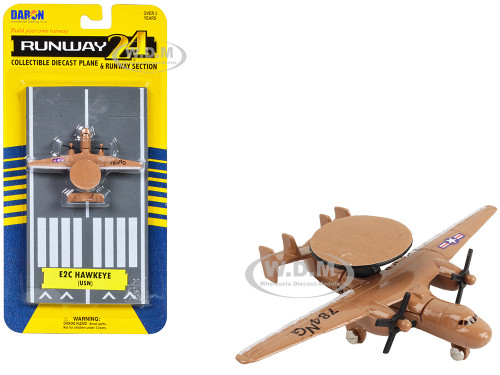
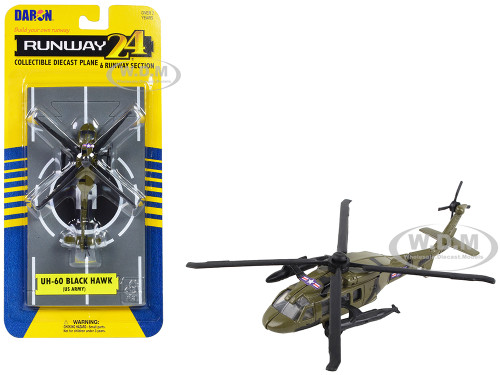
The Gulf War category at DiecastModelsWholesale.com features military diecast models and scale representations associated with the 1990–1991 conflict in the Persian Gulf. For collectors, the Gulf War is an important modern military subject because it brought together large multinational forces and showcased a new generation of armored vehicles, aircraft, helicopters, missiles, and military support equipment.
The conflict began after Iraq invaded Kuwait on August 2, 1990. A U.S.-led international coalition subsequently deployed forces to Saudi Arabia and the surrounding region during Operation Desert Shield. When diplomatic efforts failed to secure an Iraqi withdrawal, coalition combat operations began on January 17, 1991, as Operation Desert Storm. Coalition ground forces entered Kuwait and Iraq in late February, and Kuwait was liberated after a short ground campaign. A ceasefire took effect on February 28, 1991.
For collectors, Gulf War models provide an opportunity to represent one of the most technologically significant military campaigns of the late 20th century. The war combined large-scale armored warfare with extensive air operations, helicopter attacks, precision-guided weapons, electronic warfare, naval operations, and an enormous logistical effort.
Gulf War Military Models
The Gulf War was fought primarily by Iraqi forces against a broad coalition that included the United States, United Kingdom, France, Saudi Arabia, Kuwait, and numerous other nations. This international character gives collectors many different subjects to explore.
Depending on the available products, Gulf War diecast models may include:
- Main battle tanks and armored vehicles
- Military trucks and Humvees
- Fighter and attack aircraft
- Strategic and tactical bombers
- Helicopters and gunships
- Transport and tanker aircraft
- Reconnaissance and electronic warfare aircraft
- Artillery and missile systems
- Naval aircraft and ships
- British, American, French, Saudi, Iraqi, and other military subjects
The category is particularly useful for collectors building modern military displays or collections centered on the development of military technology during the late Cold War and early post-Cold War period.
Operation Desert Shield
Following Iraq's invasion of Kuwait, the United States and coalition partners began moving forces into Saudi Arabia and other areas of the Persian Gulf region.
Operation Desert Shield was primarily the defensive buildup and deployment phase. It involved moving enormous quantities of personnel, aircraft, armored vehicles, ammunition, fuel, and supplies into the region while coalition forces prepared for possible combat.
This period is represented by many of the same vehicles and aircraft later used during Desert Storm. For collectors, however, the distinction is useful when considering historical displays because equipment could appear in different locations, camouflage patterns, markings, and configurations throughout the buildup and combat phases.
Operation Desert Storm
Coalition combat operations began on January 17, 1991. The initial phase concentrated heavily on air operations against Iraqi military forces, command centers, air defenses, aircraft, infrastructure, and other strategic targets.
The air campaign involved thousands of coalition sorties and demonstrated the growing importance of precision-guided weapons, stealth technology, airborne surveillance, electronic warfare, and integrated air operations.
After weeks of air operations, coalition ground forces began their offensive on February 24. The ground campaign moved rapidly through Kuwait and southern Iraq, culminating in the liberation of Kuwait and the collapse of organized Iraqi resistance.
The Gulf War therefore provides collectors with subjects representing both high-technology air warfare and conventional armored combat.
Gulf War Tanks and Armored Vehicles
Armored vehicles are among the most recognizable Gulf War military models. The coalition deployed large numbers of tanks, infantry fighting vehicles, reconnaissance vehicles, trucks, and support equipment.
M1 Abrams
The M1 Abrams became one of the defining American armored vehicles of the Gulf War. M1A1 variants equipped with the 120 mm main gun were particularly important during the ground campaign.
The Abrams' combination of armor protection, firepower, mobility, and advanced fire-control technology made it a centerpiece of U.S. armored formations. Gulf War M1 Abrams models are especially popular with collectors interested in modern American military vehicles.
M2 Bradley
The M2 Bradley infantry fighting vehicle accompanied American armored units and provided protected troop transport and fire support.
Its combination of tracked mobility, cannon, anti-tank missile capability, and troop compartment made the Bradley an important part of mechanized formations. A Bradley model can complement an M1 Abrams display and help recreate the appearance of a Gulf War armored unit.
HMMWV
The High Mobility Multipurpose Wheeled Vehicle, commonly known as the Humvee or HMMWV, became another highly recognizable Gulf War vehicle.
The HMMWV was used in numerous configurations, including troop transport, command, communications, weapons carrier, and support roles. Its widespread use during Operation Desert Storm helped establish the vehicle as an iconic modern American military subject.
Iraqi Armored Forces
Iraq entered the conflict with a large armored force consisting of Soviet- and Chinese-designed equipment as well as locally modified and produced vehicles.
Important Iraqi tank subjects included the T-55, T-62, and T-72. Iraqi armored formations also operated infantry fighting vehicles, armored personnel carriers, artillery, and large numbers of military trucks.
For collectors, Iraqi equipment provides an important counterpoint to the Western vehicles used by coalition forces and makes it possible to build a display representing both sides of the conflict.
Gulf War Aircraft
Aircraft are among the most popular Gulf War collecting subjects because of the extraordinary variety of aircraft involved.
F-15 Eagle
The F-15 Eagle played a major role in establishing coalition air superiority. Its combination of speed, radar capability, maneuverability, and long-range weapons made it a key fighter during the conflict.
The F-15 is particularly appropriate for collectors interested in the air-to-air combat and air-superiority aspects of the Gulf War.
F-16 Fighting Falcon
The F-16 Fighting Falcon performed a wide variety of missions during the conflict. Its versatility allowed it to serve as a multirole fighter and strike aircraft.
F-16 Gulf War models can therefore represent the transition toward the highly flexible multirole combat aircraft that became increasingly important after the Cold War.
F-117 Nighthawk
The F-117 Nighthawk became one of the most recognizable aircraft of Operation Desert Storm. Its distinctive angular shape and stealth characteristics made it visually unlike conventional fighter aircraft.
The F-117's use during the conflict helped make stealth technology one of the defining subjects associated with Gulf War aviation.
A-10 Thunderbolt II
The A-10 Thunderbolt II was heavily associated with close air support and attacks against Iraqi ground forces. Its rugged design, distinctive twin engines, and large 30 mm cannon make it one of the most recognizable American military aircraft.
For collectors, an A-10 can represent the close-air-support component of the Gulf War rather than the high-altitude strategic bombing or air-superiority missions.
AH-64 Apache
The AH-64 Apache was another important Gulf War aircraft. Apache attack helicopters conducted missions against Iraqi armored forces and other targets, demonstrating the growing role of precision-guided helicopter weapons in modern warfare.
The Apache also provides an excellent companion to Gulf War tank and armored vehicle models in a military display.
Other Coalition Aircraft
The Gulf War involved a remarkably broad range of coalition aircraft. Depending on the collection, relevant subjects may include:
- F-14 Tomcat
- F/A-18 Hornet
- F-111 Aardvark
- A-6 Intruder
- AV-8B Harrier II
- B-52 Stratofortress
- C-130 Hercules
- KC-135 Stratotanker
- E-3 Sentry AWACS
- EA-6B Prowler
- Tornado GR.1
- Jaguar GR.1
- Mirage F1
- French and other coalition support aircraft
These aircraft performed different missions ranging from air superiority and ground attack to electronic warfare, reconnaissance, aerial refueling, transportation, and command and control.
Iraqi Air Force Aircraft
The Iraqi Air Force operated a diverse fleet before and during the Gulf War, including Soviet, French, and other foreign-designed aircraft.
Notable subjects include the MiG-29 Fulcrum, Mirage F1, MiG-23, MiG-25, Su-24, Su-25, and MiG-21. Iraq also operated transport and helicopter fleets.
Many Iraqi aircraft were destroyed or damaged during coalition air operations, while others were moved to Iran during the conflict. Iraqi aviation therefore represents an important part of Gulf War military history and gives collectors an opportunity to build displays that include both coalition and Iraqi equipment.
Gulf War Helicopters
Helicopters performed a wide range of missions during the conflict. Attack helicopters were used against armored formations and defensive positions, while transport helicopters moved personnel and supplies.
Important coalition helicopter subjects include the AH-64 Apache, AH-1 Cobra, UH-60 Black Hawk, and CH-47 Chinook.
The AH-64 is particularly closely associated with the Gulf War because of its role in attacks against Iraqi armored and military targets. The Black Hawk and Chinook, meanwhile, represent the transportation and logistical side of helicopter operations.
British and International Coalition Forces
Although the United States supplied the largest contingent of coalition forces, the Gulf War was an international operation.
British forces deployed Challenger 1 tanks and aircraft including the Tornado GR.1. French forces operated aircraft and armored vehicles, while Saudi Arabia, Kuwait, and other coalition members contributed troops and equipment.
This international aspect provides collectors with opportunities to build displays around specific national forces rather than limiting a collection to American equipment.
A British Gulf War display, for example, might combine Challenger 1 tanks with Tornado aircraft, while a broader coalition display could bring together American, British, French, and Middle Eastern subjects.
Naval Operations and the Persian Gulf
The coalition's naval forces played an important role before and during combat operations. Warships supported the maritime blockade, protected shipping, launched aircraft, transported troops and equipment, and contributed missile and gunfire capabilities.
Aircraft carriers provided much of the naval aviation component. Carrier-based aircraft such as the F-14 Tomcat, F/A-18 Hornet, A-6 Intruder, and other aircraft operated over the Persian Gulf and surrounding region.
For collectors interested in naval aviation, Gulf War models can therefore connect aircraft collections with the broader history of coalition naval operations.
Gulf War Military Technology
The Gulf War is frequently studied as a transition point in modern warfare. Coalition forces demonstrated the effectiveness of advanced sensors, satellite communications, airborne early warning, electronic warfare, precision-guided munitions, night-vision equipment, and integrated command systems.
Stealth aircraft, precision weapons, GPS-assisted navigation, thermal sights, and advanced targeting systems all contributed to the technological character of the conflict.
At the same time, the ground campaign demonstrated that conventional armored forces remained important. Tanks, infantry fighting vehicles, artillery, helicopters, engineers, fuel trucks, and logistical vehicles all remained essential to moving and supporting the coalition army.
This combination of high technology and conventional military equipment makes Gulf War models particularly interesting for collectors.
Gulf War vs. the Iraq War
Collectors should distinguish the 1990–1991 Gulf War from the 2003 Iraq War and subsequent military operations in Iraq.
The Gulf War category primarily concerns Operation Desert Shield and Operation Desert Storm, including the Iraqi invasion of Kuwait, coalition buildup, air campaign, ground offensive, and liberation of Kuwait.
Although some equipment types appeared in both conflicts, their configurations, markings, camouflage, and historical context can differ significantly. When building a historically focused collection, identifying the specific period represented by a model is therefore important.
Choosing Gulf War Diecast Models
When selecting a Gulf War model, consider the subject's historical role, national operator, configuration, and scale.
Popular collecting themes include:
- U.S. Gulf War aircraft
- U.S. Army Desert Storm vehicles
- British Gulf War military models
- Iraqi military equipment
- Gulf War fighter aircraft
- Desert Storm tanks
- Gulf War helicopters
- Coalition naval aviation
- Desert Storm support vehicles
- Gulf War aircraft collections
Scale Considerations
Military vehicles are commonly represented in scales such as 1/18, 1/24, 1/32, 1/35, 1/43, 1/48, 1/50, and 1/64.
Aircraft may be available in 1/48, 1/72, 1/100, 1/144, 1/200, and 1/400 scales, depending on the aircraft and manufacturer.
Larger scales are well suited to individual display pieces where vehicle and aircraft details are the primary focus. Smaller scales make it easier to build collections containing multiple aircraft, armored formations, or larger operational scenes.
Building a Gulf War Display
A Gulf War display can focus on a single vehicle, aircraft, or military service, or it can recreate the diversity of Operation Desert Storm.
An M1 Abrams paired with an M2 Bradley and HMMWV can represent a U.S. mechanized formation. An F-15, F-16, A-10, or F-117 can represent different aspects of the coalition air campaign. A Challenger 1 and Tornado GR.1 can provide a distinctly British perspective, while Iraqi T-72s, T-55s, MiG-29s, or Mirage F1s can help represent the opposing force.
Collectors can also create displays around technology, such as stealth aircraft, attack helicopters, or precision-strike aircraft, or focus on the logistics that supported the coalition force.
Whether you collect modern military aircraft, armored vehicles, helicopters, Cold War equipment, or historically significant conflicts, Gulf War models offer a distinctive way to explore the military technology and equipment of 1990–1991.
Browse the Gulf War collection at DiecastModelsWholesale.com to discover Desert Storm aircraft, tanks, helicopters, military vehicles, and other scale models for your collection or historical display.