Explore Mikoyan diecast aircraft models inspired by one of the most influential names in Soviet and Russian military aviation. Known for developing high-performance fighter aircraft, the Mikoyan design bureau helped shape the evolution of jet-powered combat aviation during the Cold War and beyond. Its aircraft are recognized for their distinctive profiles, high-speed performance, and important roles in military aviation history.
The Mikoyan category at Diecast Models Wholesale is intended for aviation enthusiasts, military aircraft collectors, and hobbyists interested in miniature replicas of aircraft developed by the Mikoyan design bureau. Depending on current product availability, models may represent famous MiG fighters, from early jet aircraft to supersonic interceptors and later-generation combat aircraft.
Whether you collect historic military aircraft, focus on Cold War aviation, or want to add a recognizable MiG fighter to your display, Mikoyan aircraft models offer a way to explore the technology and history behind these notable designs.
The History of Mikoyan Aviation
The Mikoyan design bureau was established in the Soviet Union in 1939 by aircraft designers Artem Mikoyan and Mikhail Gurevich. Its name became widely associated with the initials MiG, which appear in the designations of many of its best-known aircraft.
Following World War II, the bureau became a major contributor to Soviet jet fighter development. As jet propulsion transformed military aviation, Mikoyan developed aircraft intended to meet changing requirements for speed, altitude, maneuverability, interception, and air combat.
During the Cold War, MiG aircraft became familiar to military aviation enthusiasts around the world. Several designs served with the Soviet Union and were also operated by numerous other countries. Their widespread use, varied national markings, and participation in important historical events have made them enduring subjects for aircraft modeling.
The bureau continued developing new aircraft as aviation technology advanced. Later designs incorporated more capable engines, improved aerodynamics, updated avionics, and increasingly sophisticated weapons systems.
For diecast collectors, this history provides several ways to build a collection. Some focus on early jet fighters, others on iconic Cold War aircraft, and others on modernized or later-generation MiG designs. Each period illustrates a different stage in the development of military aviation.
Iconic Mikoyan MiG Aircraft Models
The MiG designation covers a broad family of aircraft with different missions, designs, and historical backgrounds. Understanding the major types can help collectors identify the models that best fit their interests.
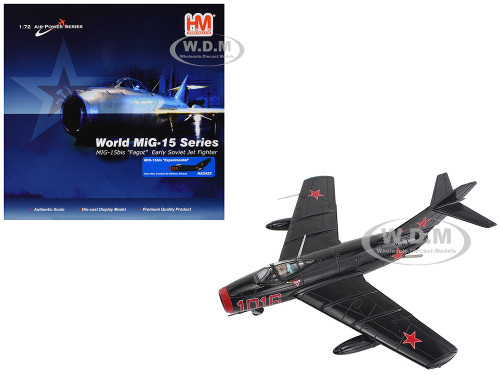
Mikoyan-Gurevich MiG-15
The MiG-15 was one of the most influential early jet fighters of the postwar era. Introduced in the late 1940s, it featured swept wings and a jet-powered design that represented a major step beyond many earlier straight-wing aircraft.
The MiG-15 became especially well known during the Korean War, where it encountered other first-generation jet fighters. Its role in this conflict made it a significant subject for collectors interested in the early jet age.
A MiG-15 diecast aircraft model can represent the transition from piston-engine fighters to jet-powered combat aircraft. Collectors may compare its compact design with later MiG aircraft that featured more advanced aerodynamic configurations.
When choosing a MiG-15 replica, consider the represented operator, markings, aircraft variant, and scale. These details can help distinguish models that depict different historical contexts.
Mikoyan-Gurevich MiG-17
The MiG-17 developed the basic concept of the MiG-15 with aerodynamic refinements that improved its performance, particularly at higher speeds. Although the two aircraft share a family resemblance, the MiG-17 incorporated important design changes.
The aircraft served with various air forces and became associated with several Cold War-era conflicts. Its distinctive swept-wing appearance makes it a recognizable subject for military aircraft collections.
For collectors, the MiG-17 provides a useful comparison with the MiG-15. Displaying both models can illustrate how fighter aircraft evolved during the early decades of the jet age.
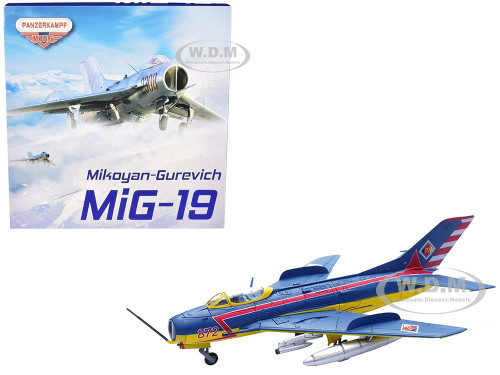
Mikoyan-Gurevich MiG-19
The MiG-19 was a significant development in Soviet fighter aviation as a supersonic jet fighter powered by two engines. It entered service during the 1950s and represented a move toward aircraft capable of exceeding the speed of sound in level flight under suitable conditions.
Its twin-engine configuration and revised airframe distinguish it from the earlier MiG-15 and MiG-17. The MiG-19 also served with several countries, creating opportunities for collectors interested in different national markings and aircraft histories.
A MiG-19 model adds variety to a display of early Cold War jets and helps represent the progression toward faster, more capable fighter aircraft.
Mikoyan-Gurevich MiG-21
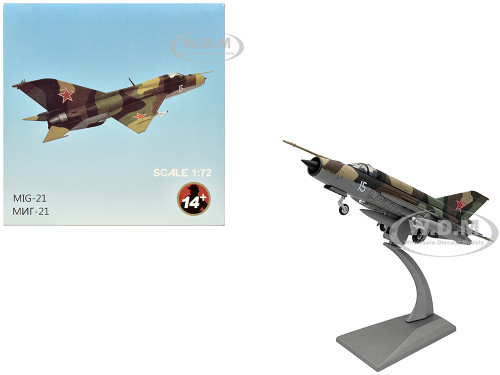
The MiG-21 is one of the most recognizable aircraft in the MiG family and one of the most widely produced supersonic jet fighters in aviation history. Introduced in the late 1950s, it is known for its pointed nose, delta wing, compact fuselage, and relatively simple design.
The MiG-21 served with numerous air forces around the world and remained in service with different operators for decades, often through upgrades and modernization programs. Its long operational history makes it an especially interesting subject for collectors.
A MiG-21 diecast model can be a centerpiece in a Cold War aircraft display. Collectors may compare versions from different countries, examine variations in camouflage and insignia, or explore how the aircraft's appearance changed across different production and upgrade programs.
Mikoyan-Gurevich MiG-23
The MiG-23 introduced variable-sweep wings, allowing the wing angle to change according to flight conditions. This feature gave the aircraft a distinctive appearance and reflected efforts to balance performance at different speeds.
Developed as a fighter and interceptor, the MiG-23 entered service during the 1970s and was operated by several countries. Its adjustable wings distinguish it from fixed-wing MiG fighters such as the MiG-21.
For diecast aircraft collectors, the MiG-23 offers an opportunity to explore a different approach to fighter design. When comparing replicas, check whether the model depicts the wings swept forward or backward, as this can affect the aircraft's display profile.
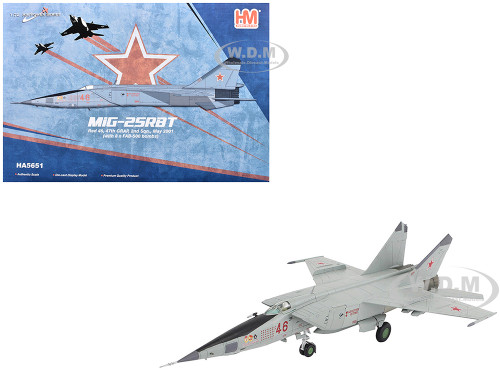
Mikoyan MiG-25 Foxbat
The MiG-25 was designed primarily for high-speed interception and reconnaissance. Its large airframe and powerful engines were developed to meet demanding requirements involving speed and altitude.
The aircraft became famous for its exceptional performance capabilities and unusual size compared with many other fighter designs. Its broad fuselage, large air intakes, and twin vertical stabilizers make it visually distinctive.
A MiG-25 diecast model is a compelling choice for collectors interested in high-speed military aircraft and Cold War technological competition. It also provides a striking contrast to smaller MiG fighters in a collection.
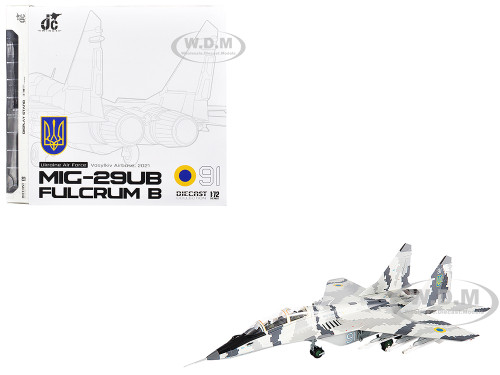
Mikoyan MiG-29 Fulcrum
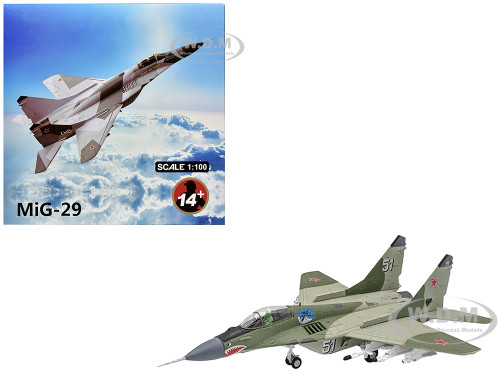
The MiG-29 is a twin-engine fighter developed during the late Cold War to provide a capable platform for air combat. Its twin tails, widely spaced engine nacelles, and prominent leading-edge extensions create a distinctive silhouette.
Introduced into Soviet service in the 1980s, the MiG-29 was subsequently operated by numerous countries. Different versions have received upgrades to avionics, engines, weapons systems, and other equipment.
MiG-29 diecast aircraft models appeal to collectors interested in later Cold War aviation and modern fighter design. Different operator markings and camouflage patterns can also provide variety for collectors who enjoy building displays around specific air forces or periods.
Mikoyan MiG-31 Foxhound
The MiG-31 is a high-speed interceptor developed from the MiG-25 concept, with substantial changes to its systems and capabilities. It is designed to operate in demanding interception roles and is notable for its large size, twin-engine configuration, and advanced radar systems for its class.
Its appearance differs from the MiG-29 and other agile multirole fighters, reflecting its specialized mission. A MiG-31 model can add an interesting dimension to a collection focused on Soviet and Russian military aviation.
Collectors should check the specific aircraft designation and configuration when comparing MiG-31 replicas, since later versions may differ in equipment and external details.
Why Collect Mikoyan Diecast Aircraft?
Mikoyan aircraft models offer several collecting possibilities because the design bureau's history spans different generations of jet technology.
-
Cold War aviation: MiG fighters represent important developments in military aviation during the period of competition between major world powers.
-
Aircraft design evolution: Models such as the MiG-15, MiG-21, and MiG-29 illustrate changes in wing design, propulsion, and aircraft configuration.
-
International aviation history: Many MiG types served with multiple countries, creating opportunities to collect different markings and finishes.
-
Distinctive silhouettes: From the MiG-21's delta wing to the MiG-23's variable-sweep wings, these aircraft have recognizable profiles.
-
Collection variety: MiG models can complement aircraft from other Soviet, Russian, European, and American manufacturers.
Collectors interested in historical accuracy may want to research the specific variant and operator represented by a miniature. Aircraft designation, insignia, camouflage, and external equipment can help distinguish one version from another.
Choosing the Right Mikoyan Aircraft Model
When selecting a Mikoyan diecast aircraft, consider the type of collection you want to build and the features most important to you.
Aircraft Type and Historical Period
You may prefer early jet fighters such as the MiG-15 and MiG-17, famous Cold War aircraft such as the MiG-21 and MiG-23, or later designs such as the MiG-29 and MiG-31.
Organizing models by generation, operational period, or aircraft role can help create a coherent display. Alternatively, collecting different MiG types provides a broader view of the bureau's design history.
Scale and Display Space
Aircraft models are produced in a variety of scales. Common scales in military aviation collecting include 1:72, 1:48, and 1:32, although availability depends on the aircraft and manufacturer.
-
1:72 scale: Often suitable for compact displays and collections containing many aircraft.
-
1:48 scale: Provides a larger display presence while remaining manageable for many shelves and cabinets.
-
1:32 scale: Offers a substantially larger miniature that can make a strong centerpiece, where available.
These are general scale considerations rather than a guarantee that every MiG type is available in each size. Always check the product listing for the exact scale and dimensions.
Markings, Finish, and Features
Before purchasing, review the product details and photographs when available. Important considerations include the aircraft variant, operator, camouflage, national insignia, landing gear, display stand, and construction materials.
Some models emphasize display presentation, while others may include additional features or movable components. The exact details depend on the individual product, so do not assume that all replicas share the same construction or accessories.
Product availability and model specifications can change over time. Checking the individual listing is the best way to confirm the features of a particular collectible.
Mikoyan Models for Aviation Enthusiasts and Gift Buyers
Mikoyan diecast aircraft can appeal to military aviation enthusiasts, model collectors, students of aviation history, and anyone fascinated by the development of jet fighters.
For an established collector, a model of a less familiar MiG variant can expand a display beyond the best-known aircraft. For someone new to military aviation collecting, a recognizable MiG-21 or MiG-29 can provide a starting point for exploring the wider family.
These models can also make thoughtful gifts for aviation enthusiasts, provided the chosen aircraft, scale, and presentation suit the recipient's interests.
Explore Mikoyan Diecast Aircraft Models
From the early MiG-15 to the supersonic MiG-21, variable-sweep MiG-23, and later MiG-29 and MiG-31, Mikoyan aircraft illustrate several important stages in the evolution of jet-powered military aviation.
Browse the Mikoyan category at Diecast Models Wholesale to explore available aircraft models, compare designs and scales, and find a distinctive addition to your aviation collection.



 $119.99
 $39.95