Military diecast models bring the vehicles, equipment, and machinery associated with military transportation and operations into collectible scale. This category can include military vehicles, tanks, armored vehicles, trucks, jeeps, utility vehicles, artillery, transport equipment, and other military subjects represented as detailed scale models.
Military vehicles are particularly interesting to collectors because their designs are closely connected to the requirements of the period in which they were developed. A World War II jeep, half-track, armored personnel carrier, main battle tank, military transport truck, or modern tactical vehicle can look dramatically different while serving related transportation, logistics, reconnaissance, or combat-support functions.
The U.S. Army Transportation Museum describes its collection as spanning more than 250 years of military transportation history, from horse-drawn wagons to armored vehicles and modern transportation systems.
At DiecastModelsWholesale.com, the Military category gives collectors an opportunity to explore military vehicles and equipment from different eras, vehicle types, manufacturers, and scales.
Types of Military Diecast Models
Military equipment covers a wide range of vehicle types. Collectors can focus on a particular class of vehicle or build a broader collection representing different aspects of military transportation.
Military Tank Models
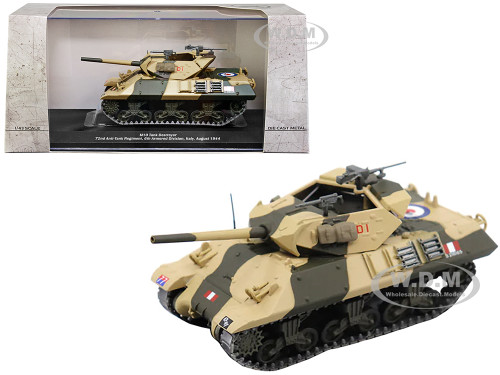
Tanks are among the most recognizable military vehicles and an important subject within military model collecting. Their combination of armor, tracked mobility, turret design, and heavy equipment makes them visually distinctive.
Modern armored warfare developed rapidly during the 20th century. The U.S. Army's history of armored forces traces the development of American tank units from World War I through the creation of the Armored Force in 1940.
Collectors may encounter models representing light tanks, medium tanks, heavy tanks, and later main battle tanks. Historic examples such as the M4 Sherman, M26 Pershing, M46 Patton, M60, and other internationally significant tanks provide a way to follow the evolution of armored vehicle design.
Armored Vehicle Models
Military diecast collections extend well beyond tanks. Armored vehicles have been developed for reconnaissance, infantry transport, command, communications, security, and other specialized purposes.
Examples include:
- Armored personnel carriers
- Infantry fighting vehicles
- Reconnaissance vehicles
- Armored cars
- Half-tracks
- Command vehicles
- Recovery vehicles
- Self-propelled artillery
- Tactical armored vehicles
The U.S. Army's historical material on mechanized forces describes how armored infantry vehicles provided cross-country mobility and armor protection while allowing infantry to operate alongside tanks.
Military Truck Models
Military trucks are another major part of military transportation history. Unlike combat vehicles designed primarily around armor or weapon systems, trucks have traditionally been essential for moving personnel, ammunition, fuel, food, spare parts, engineering equipment, and other supplies.
A military truck collection can include cargo trucks, troop carriers, fuel trucks, maintenance vehicles, transporters, and specialized support vehicles.
These models are also useful for collectors building military dioramas because trucks can be displayed alongside tanks, armored vehicles, artillery, aircraft, or field equipment.
Military Jeep and Utility Vehicle Models
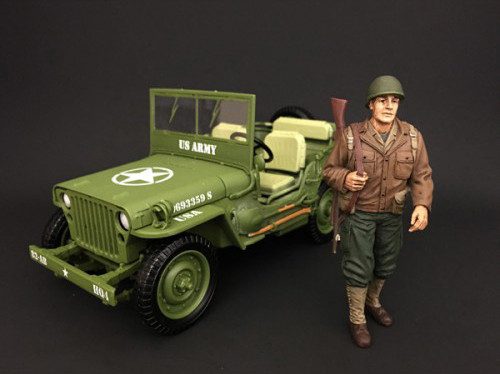
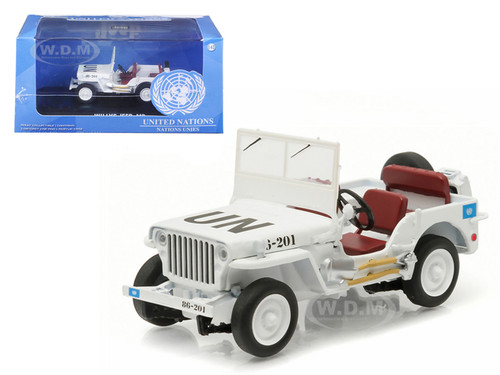
Light utility vehicles became an important part of military transportation during the 20th century. The Willys MB and Ford GPW are among the most recognizable examples from World War II.
Compact military vehicles could perform many different tasks, including reconnaissance, communications, liaison, personnel transport, and general utility work.
Their relatively small size also makes military jeep models practical for collectors with limited display space.
Military Transport and Support Vehicles
Military operations depend on a large network of vehicles that may never appear on the front line. Engineering vehicles, recovery vehicles, fuel tankers, cargo trucks, communications vehicles, ambulances, and other support equipment are all part of military logistics.
This is an important aspect of military collecting because it shows that military transportation encompasses much more than tanks and armored fighting vehicles.
A Brief History of Military Vehicles
Military transportation evolved alongside changes in engines, roads, industrial manufacturing, communications, and military organization.
For centuries, armies depended heavily on animals, wagons, carts, and other forms of non-motorized transportation. The development of internal-combustion engines eventually introduced new possibilities for moving troops and supplies.
During World War I, armored vehicles and tanks emerged as new military technologies. The U.S. Army notes that the first American tank units were organized in 1917–1918 and trained with French Renault tanks because American-built tanks were not yet available in France.
Tanks continued to evolve between the world wars, while armies developed mechanized and motorized formations. By World War II, tanks, half-tracks, trucks, jeeps, armored cars, self-propelled artillery, and other vehicles formed increasingly integrated systems.
The U.S. Army's history of armored forces describes the development of a mature Armored Force by the end of World War II, reflecting the rapid expansion of mechanized warfare during the period.
World War II Military Models
World War II is one of the most widely represented periods in military vehicle collecting.
The period produced a remarkable variety of vehicles, including:
- M4 Sherman tanks
- M3 half-tracks
- Willys MB and Ford GPW jeeps
- Military cargo trucks
- Armored cars
- Self-propelled artillery
- Tank destroyers
- Amphibious vehicles
- Recovery and engineering vehicles
Military transportation was also closely connected with naval and aviation operations. During the Normandy invasion, for example, landing craft transported tanks, vehicles, troops, and supplies from ships to the beaches. The U.S. Naval History and Heritage Command documents the use of landing craft specifically designed to transport tanks and other vehicles during Operation Overlord.
The famous LCVP, or Higgins boat, was another important military transportation vehicle. These landing craft carried troops and vehicles during numerous amphibious operations in both the European and Pacific theaters.
This broader view of military transportation can be useful when building a collection that goes beyond tanks.
Cold War and Modern Military Vehicles
Military vehicle design continued to change after World War II.
The Cold War period introduced new generations of tanks, armored personnel carriers, reconnaissance vehicles, tactical trucks, and specialized support equipment. Improvements in engines, suspension systems, armor, communications, optics, and fire-control technology changed the appearance and capabilities of military vehicles.
Later vehicles increasingly incorporated electronic systems, modular armor, improved crew protection, and advanced communications.
Collectors interested in postwar subjects can therefore organize collections around periods such as the early Cold War, Vietnam era, late Cold War, Gulf War period, or contemporary military vehicles.
Collecting Military Diecast Models by Era
One of the most effective ways to organize military models is chronologically.
World War I
Early armored vehicles and the first generations of tanks represent the transition from traditional military transportation toward mechanized warfare.
World War II
World War II offers an exceptionally broad range of vehicles, from small utility jeeps to heavy tanks, trucks, amphibious vehicles, and specialized engineering equipment.
Korean War and Vietnam Era
Postwar military vehicles show the development of new armored platforms, tactical vehicles, helicopters, and logistical equipment.
Cold War
The Cold War produced several generations of tanks, armored personnel carriers, reconnaissance vehicles, transport trucks, and other military equipment.
Modern Military Vehicles
Contemporary models can represent modern main battle tanks, tactical vehicles, armored personnel carriers, transport trucks, and specialized support equipment.
Collecting across several eras provides a visual history of how military vehicle engineering changed over time.
Collecting by Military Vehicle Type
Collectors can also build a collection around a particular type of equipment.
A tank collection might focus on different generations of armored vehicles from several countries.
An army truck collection can concentrate on transportation and logistics vehicles.
A jeep and utility vehicle collection can showcase compact military transportation.
An armored vehicle collection can compare personnel carriers, reconnaissance vehicles, and infantry fighting vehicles.
Another approach is to combine complementary vehicle types to create a complete historical scene.
Military Manufacturers and Vehicles
Manufacturer and vehicle identity are important considerations when selecting military models. Collectors may focus on particular vehicle designs or compare equipment developed by different countries.
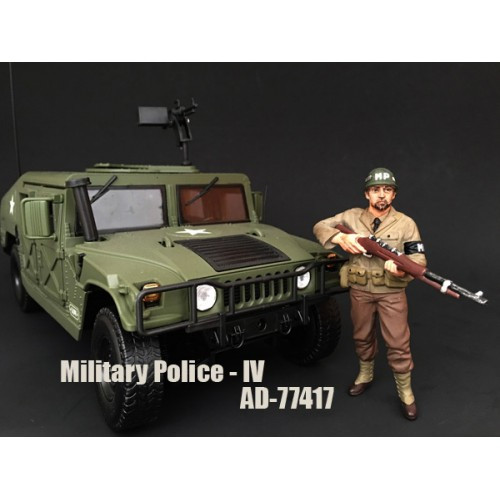
Well-known military vehicle subjects can include American vehicles such as the Willys MB, Ford GPW, M3 Half-track, M4 Sherman, M26 Pershing, M60, and HMMWV, as well as internationally recognized vehicles such as the Jeep, Land Rover, Volkswagen Type 82 Kübelwagen, T-34, Tiger, Panther, Centurion, Leopard, and other armored vehicles.
When selecting a model, it is useful to check the exact vehicle designation and historical configuration rather than relying only on a general vehicle name. Different production versions can have substantial differences in equipment, armor, turrets, wheels, markings, or other details.
Military Diecast Scales
Scale is an important part of military model collecting. Depending on the vehicle and manufacturer, collectors may find military models in scales such as 1/12, 1/18, 1/24, 1/32, 1/35, 1/43, 1/48, 1/50, 1/64, and 1/72.
Larger scales provide more space for visible details such as tools, hatches, tracks, wheels, stowage, weapons, markings, and interior components.
Smaller scales make it easier to display multiple vehicles together and are particularly useful for larger military scenes.
If you already collect military vehicles, matching the scale of new additions can help create a more consistent display.
Building a Military Vehicle Display
Military models can be displayed individually or arranged into historical or thematic scenes.
A simple display might feature one tank or military truck. A larger diorama could combine tanks, armored vehicles, cargo trucks, jeeps, artillery, personnel, and accessories.
Collectors can also create displays based on:
- A particular military unit
- A historical period
- A specific conflict
- A vehicle type
- A country or military
- A convoy or logistics scene
- An armored formation
- An amphibious operation
For example, a World War II display could combine an M4 Sherman with a military cargo truck and jeep. A modern display might instead feature a main battle tank, tactical vehicle, and support truck.
Military Models for History and Transportation Collectors
Military diecast models appeal to collectors interested in more than military history alone. They also provide a way to explore transportation, automotive engineering, industrial design, logistics, and technological development.
The U.S. Army Transportation Museum's collection demonstrates the breadth of this subject, preserving vehicles and artifacts that document how military forces have moved personnel and equipment across different periods.
For collectors, this makes military vehicles a particularly versatile category. A collection can be narrowly focused on tanks or expanded to include the trucks, utility vehicles, amphibious craft, and support equipment that made military transportation possible.
What to Consider When Choosing a Military Diecast Model
Before adding a model to your collection, consider:
Vehicle type: Decide whether you are looking for a tank, armored vehicle, military truck, jeep, artillery vehicle, or support vehicle.
Historical period: Identify the era represented by the model.
Vehicle designation: Check the specific model or variant, especially when collecting historically significant vehicles.
Markings: Unit insignia, registration numbers, camouflage, national markings, and other details can help define a particular vehicle.
Scale: Choose a scale that fits your existing models and available display space.
Display theme: Consider whether the model will stand alone or become part of a larger military diorama.
Shop Military Diecast Models
Explore the Military category at DiecastModelsWholesale.com to find collectible military vehicles and equipment representing different eras, vehicle types, and scales.
Whether you are looking for a historic tank, military truck, classic jeep, armored vehicle, or another piece of military transportation history, browse the available military diecast models and find the vehicles that fit your collection and display.



 $31.99

 $34.99
 $9.99
 $9.99
 $9.99
 $9.99
 $9.99
 $9.99

 $18.99
 $9.99
 $11.49Was $13.99Save 17%