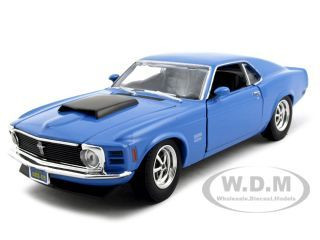
Ford Mustang Diecast Models
The Ford Mustang is one of the most recognizable American performance cars ever produced, and Mustang diecast models allow collectors to follow more than six decades of changing design, performance, technology, and automotive culture in miniature.
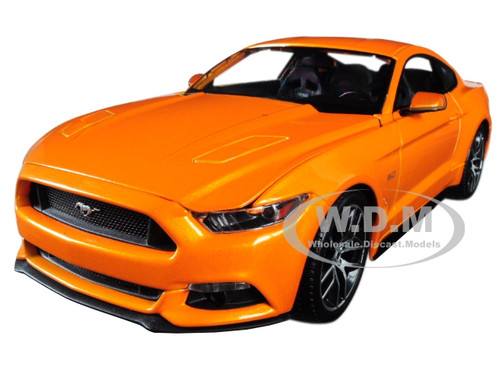
The Mustang category at DiecastModelsWholesale.com features Ford Mustang model cars and collectible scale replicas representing different generations, body styles, performance versions, and special editions. Depending on the individual model, shoppers may find classic first-generation Mustangs, fastbacks, convertibles, modern Mustang GTs, Shelby models, Mach 1s, Boss Mustangs, Bullitt editions, racing versions, and other Mustang variants.
The range of Mustang history makes this category especially versatile for Ford collectors, muscle car enthusiasts, classic-car collectors, movie-car fans, and diecast hobbyists. A collector can concentrate on a single generation or model year, build a collection around Shelby and Ford Performance cars, or assemble a chronological display showing how the Mustang changed from 1964 to today's seventh-generation models.
The History of the Ford Mustang
Ford introduced the Mustang to the public at the New York World's Fair on April 17, 1964. Although sold as a 1965 model, the Mustang's April 1964 launch date became one of the most important dates in its history. Ford offered the new car initially as a hardtop and convertible, with the 2+2 fastback joining the lineup later in 1964.
The Mustang combined a relatively compact footprint with sporty styling, multiple engine choices, and extensive options. Its combination of price, appearance, and personalization helped create what became known as the pony car segment.
Ford reported more than 418,000 Mustangs sold during the first year, far exceeding the company's original expectations.
That extraordinary beginning is part of what makes the Mustang such an interesting diecast subject. Unlike a model associated with only one particular era, the Mustang has continued through seven generations, with each generation offering substantially different styling and performance characteristics. Ford marked the Mustang's 60th anniversary in 2024 and identified the current car as the seventh generation.
First-Generation Mustang Diecast Models
The first-generation Mustang is one of the most popular subjects in classic-car diecast collecting. Ford's first-generation Mustang timeline spans the 1965–1973 model years, beginning with the cars introduced in 1964 and continuing through the early 1970s.
Early Mustangs established the proportions that became synonymous with the nameplate: a long hood, short rear deck, and compact sporty body.
1965 Mustang Models
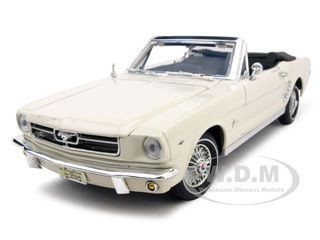
The 1965 Mustang is closely associated with the car's introduction and the early fastback, hardtop, and convertible body styles. A 1965 Mustang diecast model can represent the beginning of the production Mustang story and works particularly well in a collection focused on historically important American automobiles.
1966 Mustang Models
The 1966 Mustang continued the successful first-generation formula while offering a wide range of configurations. Ford's historical records show that Mustang sales passed the one-million mark in March 1966.
1967–1968 Mustang Models
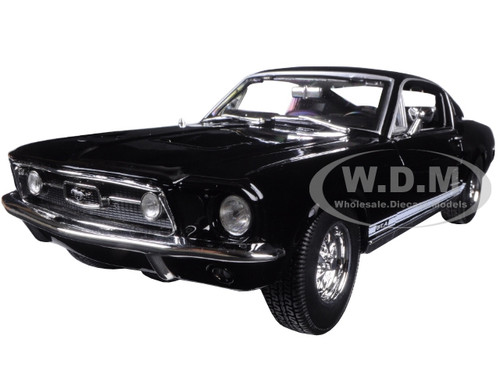
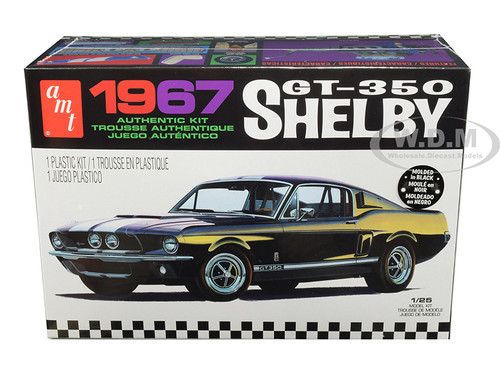
The 1967 Mustang received a more substantial body design, including a larger grille and longer nose. Shelby also introduced the GT500 during this period. In 1968, the Mustang gained additional performance options, including the 428 Cobra Jet engine.
These years are particularly important to collectors looking for classic Mustang fastback models, Shelby Mustang diecast, and 1960s muscle car replicas.
1969–1970 Mustang Models
The 1969 model year expanded the performance-oriented Mustang lineup with the Boss 302, Boss 429, and Mach 1. The Mach 1 became an important part of Mustang performance history, while the Boss models developed a strong connection with motorsports.
Ford also offered the 428 Cobra Jet and other high-performance configurations during this period, giving collectors numerous historically significant versions to choose from.
1971–1973 Mustang Models
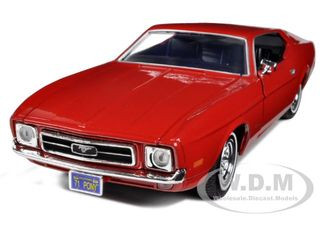
The Mustang grew substantially for 1971, becoming longer and heavier than the original cars. The Boss 351 and increasingly powerful Mach 1 configurations represented the performance side of this later first-generation period.
These models provide an interesting contrast with the compact proportions of the earliest Mustangs.
Shelby Mustang Diecast Models
Shelby Mustang diecast models represent one of the most important performance branches of Mustang history.
Carroll Shelby's involvement began early in the Mustang's life. Ford turned to Shelby American in 1964 to develop a street-legal high-performance Mustang suitable for SCCA B-Production racing. The resulting 1965 Shelby GT350 became an important competition and performance car.
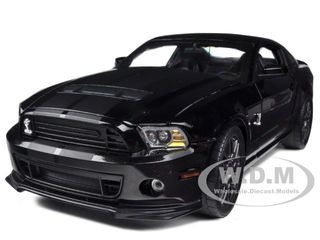
Shelby models continued to evolve, including the GT500 introduced for 1967. Later generations revived the Shelby name with models such as the modern GT350 and GT500.
For collectors, Shelby Mustangs can form a specialized collection within the broader Mustang category. They also pair naturally with Ford racing models, American muscle cars, and performance-car collections.
Mustang Mach 1, Boss and Performance Models
The Mustang's performance history extends well beyond Shelby.
The Mach 1 debuted for 1969 and became one of the most recognizable performance-oriented Mustang names. Ford later revived the Mach 1 name, including a modern version that incorporated design and engineering elements influenced by the Shelby GT350 and GT500.
The Boss 302 and Boss 429 are also major collector subjects from the classic era. The Boss 302 had a direct connection to Ford's Trans-Am racing program, while the Boss 429 is particularly associated with Ford's effort to homologate a powerful engine for NASCAR competition. Ford later revived the Boss 302 name for the 2012 model year.
These versions are useful for collectors who want their Mustang collection to emphasize performance, racing heritage, or historically significant factory variants.
Second-Generation Mustang: Mustang II
The Mustang II arrived for the 1974 model year during a very different automotive environment. Ford's historical timeline identifies the Mustang II as the second generation and notes that a V8 returned for 1975 after not being offered for the first 1974 model year.
The Mustang II is sometimes overlooked when collections focus primarily on the classic 1960s cars, but it represents an important transition in Mustang history. Its smaller dimensions and changed engineering reflected the industry's response to changing fuel economy requirements and consumer preferences.
A Mustang collection covering the full history of the nameplate benefits from including this generation alongside the more familiar first-generation cars.
Third-Generation Mustang and the Fox Body
The third-generation Mustang, introduced for 1979, moved to Ford's Fox platform and remained in production through 1993. Ford's historical material identifies the 1979 Mustang as the beginning of the Euro-styled Fox-platform era.
The generation also produced several important collector versions, including the Mustang GT, Mustang SVO, and later performance variants. The Mustang GT returned in 1982 after a 12-year absence, while the SVO debuted in 1984.
Fox-body Mustang models are especially popular with collectors interested in 1980s and early-1990s American performance cars.
Fourth-Generation Mustang
The fourth-generation Mustang arrived for 1994 with a major design change that brought a more contemporary interpretation of the classic pony-car shape. Ford's timeline identifies 1994 as the beginning of the fourth-generation Mustang, which continued through 2004.
This period included performance models such as the SVT Cobra and Cobra R, along with the return of the Mustang's 5.0-liter V8 earlier in the generation and the later adoption of Ford's 4.6-liter Modular V8.
For collectors, these cars provide a bridge between the Fox-body era and the modern retro-inspired Mustang.
Fifth-Generation Mustang
The fifth-generation Mustang began with the redesigned 2005 model. Its styling drew heavily from classic Mustang design cues while incorporating modern proportions and engineering. Ford began production of the new Mustang in 2004 for the 2005 model year.
This generation also brought back several historically important names. The Mustang Shelby GT500, Boss 302, Mach 1, and Bullitt all became significant subjects for collectors.
The fifth generation is particularly useful for diecast collections that connect classic Mustang styling with the modern era.
Sixth-Generation Mustang
The sixth-generation Mustang debuted for 2015 and introduced a number of major changes, including independent rear suspension across the lineup. Ford also developed the Shelby GT350 and GT350R during this generation, including a 5.2-liter V8 with a flat-plane crankshaft.
The generation also included the return of the Bullitt edition, modern Shelby models, and other special versions. Ford's 2018 historical material identifies the 2015 Mustang as the sixth generation and notes the subsequent GT350/GT350R models.
Seventh-Generation Mustang
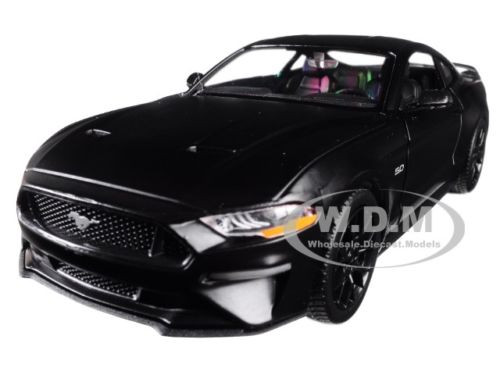
The seventh-generation Mustang continues the nameplate's history into the modern era. Ford describes the current Mustang as the seventh generation and used its 60th-anniversary celebrations in 2024 to highlight the continuity between the original 1964 car and the latest generation.
For collectors, modern Mustang models provide an opportunity to continue a chronological collection beyond the classic and Fox-body eras.
Mustang Movie Cars and Pop Culture
Mustang diecast models are not limited to factory-production versions. The car has had a long relationship with film and popular culture.
The 1968 Mustang GT fastback from Bullitt is one of the most famous examples. Two identical Mustang GT fastbacks were used during filming, and the car driven by Steve McQueen became closely associated with the movie's San Francisco chase sequence.
Ford's historical records also note that the Mustang appeared in the James Bond film Goldfinger only months after its launch.
This makes movie-related Mustang models particularly interesting for collectors who combine diecast cars with movie and TV collectibles. A Bullitt Mustang, for example, can be collected as both a classic Ford and a movie vehicle.
Mustang Racing and Competition Models
The Mustang's competition history began almost immediately after its introduction. Ford records a successful Mustang appearance in the 1964 Tour de France Automobile, only months after the car debuted.
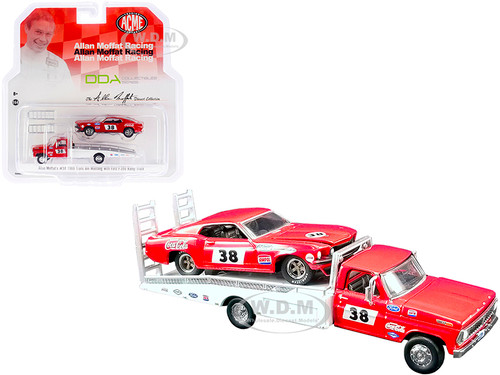
Mustangs have subsequently competed in a wide range of racing disciplines, including Trans-Am, NASCAR, NHRA, IMSA, Australian Supercars, Formula Drift, and endurance racing. Ford's racing history also documents Mustang competition at the 24 Hours of Le Mans with the seventh-generation Mustang GT3.
Racing Mustang diecast models can therefore add another dimension to a collection, especially when displayed alongside road-going GT, Boss, Shelby, or Mach 1 models.
Collecting Mustang Diecast Models by Era
One of the simplest ways to build a Mustang collection is chronologically.
Classic Mustang
Focus on 1965–1973 cars, including hardtops, convertibles, fastbacks, Shelby models, Boss variants, and Mach 1s.
Mustang II
Add 1974–1978 models to represent the transition from the original Mustang design to a smaller, more economical era.
Fox Body
Collect 1979–1993 Mustang models, including GT, SVO, and other performance versions.
SN95 and New Edge
The 1994–2004 generation provides models ranging from standard Mustangs to SVT Cobra performance cars.
Retro Mustang
The 2005–2014 Mustang connects modern engineering with styling cues inspired by earlier generations.
Modern Mustang
The sixth- and seventh-generation cars provide contemporary GT, Shelby, Mach 1, Bullitt, racing, and other performance subjects.
Mustang Diecast Models by Body Style
Body style can be another useful way to organize a collection. Depending on the model and year, Mustang collectors may encounter:
- Hardtop and coupe models
- Fastback models
- Convertibles
- Shelby performance models
- Boss models
- Mach 1 models
- Bullitt models
- Racing Mustangs
- Modern GT and Shelby models
The fastback is particularly important because it became one of the defining Mustang silhouettes, while convertibles provide a substantially different display appearance.
Mustang Diecast Scales
Diecast Mustangs are produced in several popular scales, allowing collectors to choose models according to available display space and existing collections.
1/12 Mustang Models
1/12 scale Mustang models offer a large display format with room for extensive exterior and interior detail. They can work particularly well as centerpiece models.
1/18 Mustang Models
1/18 scale Mustang diecast models provide a strong combination of size and detail. This scale is particularly useful for collectors who want to examine features such as wheels, grilles, interiors, engines, and body lines.
1/24 Mustang Models
1/24 scale Mustang models are a practical choice for collections containing several American cars. Their size allows collectors to display multiple vehicles without requiring the space of larger 1/18 or 1/12 models.
1/43 Mustang Models
1/43 scale Mustang models are well suited to chronological collections and displays where space is limited.
1/64 Mustang Models
Smaller Mustang models can make it easier to collect many different years, colors, special editions, and racing versions in a compact display.
Exact scale, construction, and features vary by product, so shoppers should check each individual listing before purchasing.
Choosing a Mustang Diecast Model
With so many versions available, choosing a Mustang model can begin with a few simple questions:
- Which generation? Classic, Fox body, SN95, retro, or modern?
- Which version? GT, Shelby, Boss, Mach 1, Bullitt, Cobra, or standard Mustang?
- Which body style? Fastback, coupe, convertible, or racing car?
- Which scale? Match the model to your display space and existing collection.
- Which era or year? A specific model year can be more important than the general generation.
- Factory or movie version? Some collectors prefer production-accurate vehicles, while others specifically seek famous movie or racing cars.
- Which manufacturer? Compare construction, detailing, finish, and included features between individual models.
For collectors building a chronological display, it can be useful to record the model year, generation, body style, trim, scale, manufacturer, and subject for each model.
Build a Ford Mustang Collection
The Mustang is particularly well suited to collection building because its history naturally divides into distinct generations and performance branches.
A collector can start with one favorite car—a 1967 fastback, 1969 Mach 1, Shelby GT500, Fox-body GT, 1990s Cobra, 2005 Mustang GT, Bullitt, or modern Shelby—and gradually expand into other generations.
Mustang models also work naturally alongside other Ford collectibles, American muscle cars, classic cars, movie vehicles, and racing models. A chronological display can tell the story of the Mustang visually, from the first-generation pony car through today's seventh-generation Mustang.
Shop Ford Mustang Diecast Models
Explore the Mustang category at DiecastModelsWholesale.com to find Ford Mustang diecast model cars in collectible scales and a wide range of eras and performance themes. Compare generations, model years, body styles, Shelby and Ford Performance variants, movie cars, racing versions, and available scales to find the Mustang models that fit your collection.

 $19.95




 $23.99Was $28.99Save 17%


 $29.99