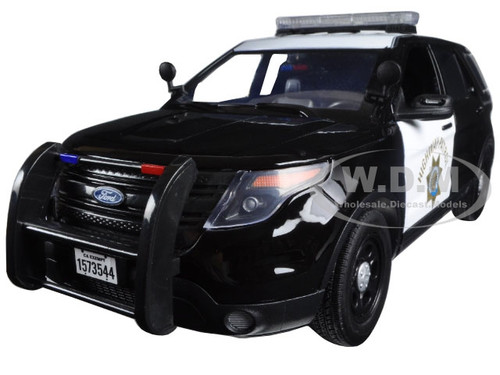
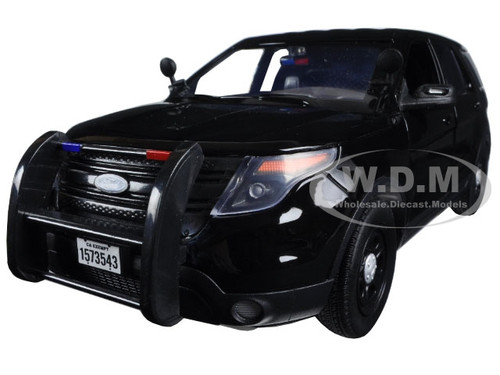
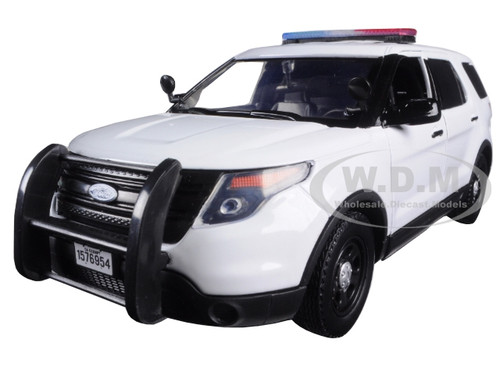
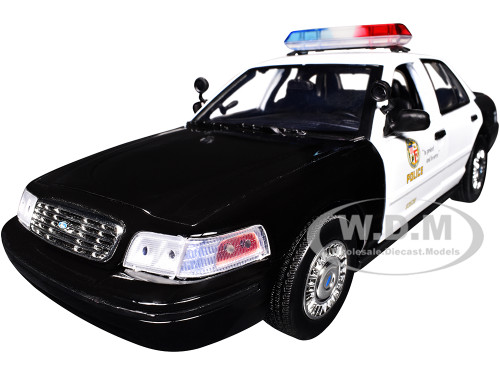
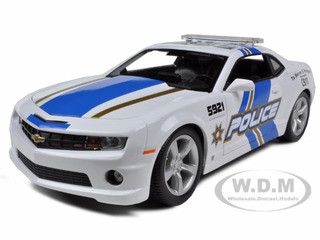
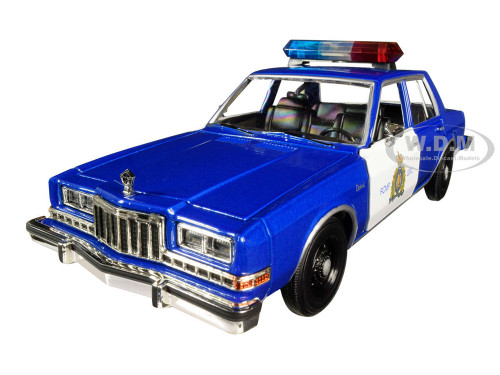
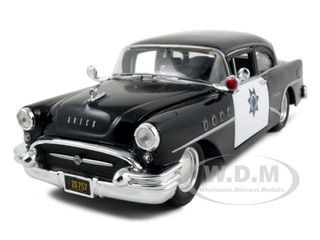
Police Department diecast models represent the vehicles used by police agencies for patrol, traffic enforcement, investigations, supervision, emergency response, and other law-enforcement duties. These miniature replicas combine automotive design with police-specific equipment such as emergency lighting, radios, push bars, spotlights, markings, antennas, and department graphics.
At DiecastModelsWholesale.com, the Police Department category focuses on scale replicas of police cars and other law-enforcement vehicles. Depending on the individual model, collectors may find marked patrol cars, highway patrol vehicles, police interceptors, detective or unmarked-style vehicles, SUVs, trucks, motorcycles, and other specialized police subjects.
Police vehicles are especially interesting collectibles because the underlying automobile can often be identified by its model year, body style, police package, department, jurisdiction, and equipment configuration. A Ford Crown Victoria used by a highway patrol agency, for example, represents a different collecting subject from an identically styled civilian Crown Victoria.
What Are Police Department Diecast Models?
A police diecast model is a scale representation of an automobile or other vehicle used for law-enforcement service. Many models use a die-cast metal body combined with plastic components, clear glazing, rubber or plastic tires, and detailed interior or exterior parts.
Depending on the manufacturer and scale, a police vehicle model may feature:
- Police department graphics and markings
- Emergency light bars or roof-mounted lights
- Front push bars
- Spotlights
- Police antennas
- Radios and communication equipment
- Police-specific wheels
- Detailed interiors
- Opening doors, hoods, or trunks
- Realistic tires
- Police equipment in the cabin or trunk
- Agency names, unit numbers, or jurisdiction markings
These details help transform an ordinary automobile into a recognizable police car model.
The History of the Police Car
The relationship between automobiles and policing developed as motor vehicles became increasingly common during the early 20th century. Automobiles provided police departments with a way to patrol larger areas and respond to incidents more quickly than officers traveling on foot, bicycles, or horse-drawn vehicles.
The Library of Congress documents the rapid growth of automobile transportation during this period, including the development and mass production of the Ford Model T beginning in 1908. As automobiles became increasingly accessible, police departments incorporated them into their operations.
Early police vehicles were not necessarily purpose-built police cars. Departments could adapt ordinary automobiles for patrol duties, adding equipment appropriate to local requirements.
Historical records at The Henry Ford provide an excellent illustration of this development. Ford's Model A was offered in a range of commercial configurations, including police patrol vehicles, and a 1931 New York City Police Department parade included 244 Model A roadsters.
By the 1930s, automobile performance was becoming an increasingly important consideration for police work. The Henry Ford's collection includes photographs of 1939 Ford V-8 police cars and notes that their combination of V8 power, speed, and relatively affordable pricing made them suitable for police departments.
From Patrol Cars to Police Interceptors
As automobiles became faster and more sophisticated, manufacturers increasingly developed vehicles specifically suited to police use. Police packages could include upgraded suspension, brakes, cooling systems, electrical equipment, heavy-duty components, and performance-oriented powertrains.
One of the most recognizable American examples is the Ford Crown Victoria Police Interceptor. The Henry Ford's collection includes a 2011 Ford Crown Victoria Police Interceptor used by the California Highway Patrol and describes how Ford modified the vehicle for high-speed and heavy-duty police service.
Other manufacturers also developed police-oriented versions of passenger cars, SUVs, and trucks. As a result, police diecast collections can cover many generations of American automobiles rather than being limited to one particular body style.
Types of Police Vehicles
The term "police car" covers a wide range of vehicles. Collectors can organize models according to their operational role as well as the automobile manufacturer.
Patrol Cars
Patrol cars are among the most recognizable police vehicles. They are used for routine patrol, traffic enforcement, emergency response, and a wide range of calls.
Classic patrol-car subjects include full-size American sedans, while later generations increasingly include sport utility vehicles and other vehicle types.
Highway Patrol Cars
Highway patrol vehicles are generally associated with traffic enforcement and patrol on major roads and highways. Their specifications may emphasize acceleration, high-speed stability, braking, visibility, and durability.
State highway patrol and state police markings also make these models particularly interesting to collectors because the same underlying vehicle can appear in very different liveries depending on the jurisdiction.
Police Interceptors
The term Police Interceptor is strongly associated with Ford's police vehicle history. Models carrying this designation can represent different generations of police-focused Ford vehicles.
The Ford Crown Victoria Police Interceptor is one of the best-known examples, while later Ford police vehicles have included the Taurus-based Police Interceptor and Police Interceptor Utility.
Police SUVs
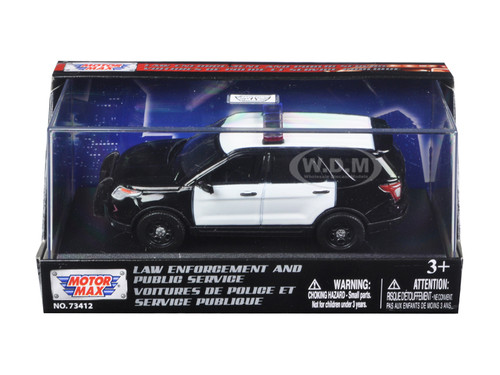
Modern law-enforcement fleets increasingly include SUVs because their greater cargo capacity and higher seating position can be useful for patrol, supervisory, utility, and specialized duties.
Police SUV models can therefore add a modern dimension to a collection that otherwise focuses on traditional police sedans.
Police Trucks and Specialty Vehicles
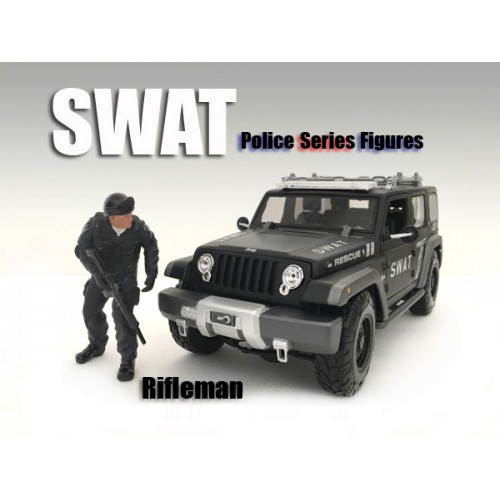
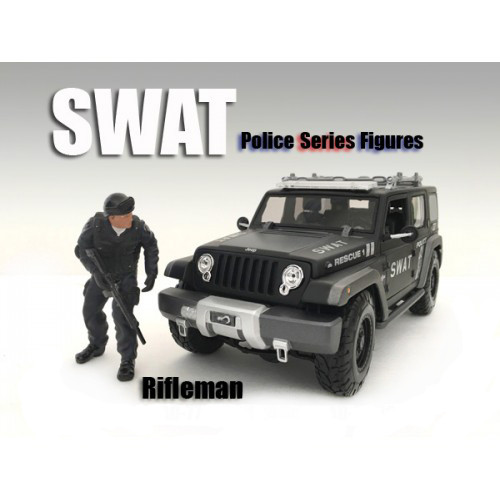
Some law-enforcement operations require vehicles beyond conventional patrol cars. Police departments and related agencies may use pickups, vans, utility vehicles, command vehicles, motorcycles, and specialized emergency-response vehicles.
These models can broaden a police collection beyond the familiar black-and-white patrol sedan.
Police Markings and Department Liveries
One of the most important features of a police diecast model is its livery.
A police car can often be identified by:
- Department name
- City, county, or state designation
- Badge or shield graphics
- Unit number
- Vehicle identification number
- Emergency telephone number
- Agency slogan
- Highway patrol markings
- Reflective striping
- Warning decals
- Roof or trunk markings
For collectors, these details can be as important as the automobile itself. A particular department livery can turn an otherwise ordinary production vehicle into a historically or geographically specific police subject.
The Henry Ford's 2011 California Highway Patrol Crown Victoria, for example, carries California Highway Patrol markings and other agency-specific inscriptions that distinguish it from a civilian Crown Victoria.
Emergency Equipment on Police Models
Police vehicles have evolved alongside communications and emergency-response technology. Earlier vehicles could have relatively simple sirens and warning lights, while later patrol cars incorporated increasingly sophisticated lighting, radios, computers, antennas, and other equipment.
Modern police diecast models may reproduce details such as:
Light Bars
Roof-mounted light bars are one of the most recognizable visual features of a marked police vehicle. Their design can help establish the era represented by a model.
Push Bumpers
Push bars or push bumpers are common on many patrol vehicles. They provide additional front-end protection and can be associated with specific police packages or agency preferences.
Spotlights
Traditional police sedans often feature a spotlight mounted near the driver's side A-pillar. This small detail can add considerable authenticity to a scale model.
Antennas and Radios
Communication equipment is an important part of a police vehicle's working environment. Antennas, radio equipment, and other communications details may appear on more highly detailed replicas.
American Police Car History in Diecast Form
Police vehicles provide a unique way to follow changes in American automobile design.
A chronological collection might begin with early Ford Model A police vehicles, move through the V8-powered patrol cars of the 1930s and 1940s, continue through the full-size sedans of the postwar era, and eventually reach modern police SUVs.
This approach lets collectors see how police vehicles changed along with the broader automobile industry.
For example:
1930s: Ford Model A and V8-based patrol vehicles demonstrate the early integration of automobiles into police fleets.
1950s–1960s: Larger American sedans and increasingly powerful engines became common subjects for police service.
1970s–1980s: Fuel economy, changing vehicle technology, and evolving police requirements influenced fleet choices.
1990s–2000s: Full-size police sedans such as the Ford Crown Victoria became particularly recognizable.
Modern era: Police fleets increasingly incorporate SUVs, crossovers, specialized vehicles, and updated communications and emergency equipment.
Police Motorcycle Models
Although patrol cars dominate many police collections, motorcycles have a long association with traffic enforcement and patrol duties. Police motorcycles can provide an interesting contrast to four-wheel police vehicles because of their distinctive equipment, markings, fairings, storage compartments, and warning lights.
Collectors interested in this side of law enforcement can also explore the broader Motorcycle collection.
Police Diecast Scales
Police models are available in a variety of scales, depending on the manufacturer and vehicle.
Common scales include:
- 1/12 scale – large display models with substantial room for detail
- 1/18 scale – popular for detailed police and automotive replicas
- 1/24 scale – a practical size for display collections
- 1/32 scale – compact models that work well in larger vehicle scenes
- 1/43 scale – a traditional scale for collecting cars and emergency vehicles
- 1/64 scale – miniature police cars suitable for compact collections and dioramas
- 1/87 scale – very small models useful for miniature scenes
The actual scale available depends on the particular police vehicle and manufacturer. When building a coordinated display, keeping models at the same scale can create a more consistent appearance.
What to Consider When Collecting Police Cars
A police vehicle collection can be organized in several ways.
By Department
Some collectors focus on a particular agency, such as a city police department, county sheriff, state police, or highway patrol.
By Vehicle
Another approach is collecting different police versions of a particular automobile. Ford Crown Victoria, Chevrolet Caprice, Ford Mustang, Dodge Charger, and other vehicles have all appeared in law-enforcement roles.
By Era
A chronological collection can show how police cars evolved from early patrol automobiles to modern SUVs and specialized vehicles.
By Scale
Collectors may concentrate on 1/18, 1/24, 1/43, 1/64, or another preferred scale.
By Function
Patrol, highway enforcement, traffic, detective, command, and specialty vehicles can each form their own collecting theme.
Police Cars and Other Emergency Vehicles
Police vehicles are part of a larger emergency-vehicle collecting category. A display can combine police cars with Fire Department Diecast Models and Ambulance Diecast Models to represent different emergency services.
Collectors can also explore the broader Vehicle Type collection for additional specialized vehicles.
Browse Police Department Diecast Models
From early patrol automobiles and classic highway patrol cars to recognizable police interceptors, modern SUVs, motorcycles, and department-specific vehicles, Police Department diecast models offer a way to collect both automotive and law-enforcement history in miniature form.
Browse the Police Department collection at DiecastModelsWholesale.com to explore available police car models, scales, departments, vehicle types, and eras, and find a law-enforcement vehicle that fits your collection.


 $204.99



 $18.99

 $9.99
 $7.99