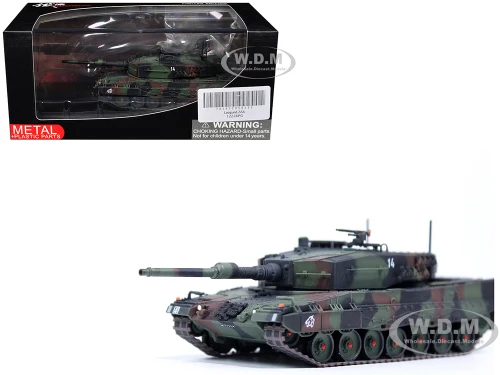
Switzerland military diecast models offer collectors a closer look at the vehicles, aircraft, and equipment used by the Swiss Armed Forces throughout the country's distinctive military history. Switzerland's defense strategy has been strongly influenced by its mountainous terrain, central European location, tradition of neutrality, and emphasis on protecting its own territory.
This category focuses on Switzerland military models, including scale representations of Swiss tanks, armored vehicles, military trucks, aircraft, helicopters, and other equipment. Depending on available products, collectors may find models associated with the Swiss Army and Swiss Air Force, ranging from Cold War-era vehicles and aircraft to modern Swiss military equipment.
Swiss military equipment is particularly interesting to collectors because Switzerland has frequently adapted foreign-designed systems to its own requirements while also developing and producing specialized equipment domestically. The result is a collection of military vehicles and aircraft that can look familiar at first glance but often feature distinctly Swiss configurations, markings, modifications, or operational concepts.
Swiss Military History and Neutrality
Switzerland's military history cannot be separated from its long-standing policy of neutrality. The country maintained armed neutrality during both World Wars and developed a defense strategy intended to make an invasion difficult while preserving the country's independence.
Switzerland's mountainous geography has played an important role in this strategy. Alpine terrain, narrow valleys, forests, and limited transportation corridors influenced the organization and equipment of the Swiss military. Mobility, defensive positions, engineering, and the ability to operate in difficult terrain became important considerations.
During the 20th century, Switzerland maintained a substantial citizen-based military system and invested heavily in territorial defense. The country's armed forces were consequently equipped with a mixture of domestically developed systems and vehicles acquired from major European defense manufacturers.
For collectors, this creates a fascinating subject spanning World War II, the Cold War, and modern European military history.
Swiss Tanks and Armored Vehicles
Swiss armored vehicle history includes both imported tanks and highly distinctive domestic designs. The country's armored forces were developed with the goal of providing effective mobile firepower while remaining suitable for Swiss terrain.
Panzer 61
The Panzer 61 was one of Switzerland's major postwar domestic tank developments. It was developed from the Swiss Army's experience with earlier armored vehicles and incorporated a number of design features intended for Swiss requirements.
Its relatively compact configuration and distinctive appearance make the Panzer 61 an interesting subject for collectors who specialize in Cold War armored vehicles.
Panzer 68
The Panzer 68 followed the Panzer 61 and became another important Swiss-designed main battle tank. It incorporated improvements in protection, firepower, and systems while retaining the general design philosophy of its predecessor.
Panzer 68 models are particularly valuable to collectors who want something different from the better-known American, German, Soviet, or British tanks that dominate many Cold War collections.
Swiss Centurion and Leopard 2
Switzerland also operated foreign-designed tanks. The Centurion became an important part of Swiss armored forces during the postwar period, while the German Leopard 2 was later selected to modernize the Swiss tank fleet.
Swiss Leopard 2 vehicles were designated Panzer 87 Leopard 2 and adapted for Swiss service. This provides an excellent example of how an internationally successful tank design could be modified to meet the requirements of a particular national military.
Swiss Armored Personnel Carriers
Swiss armored forces have also used armored personnel carriers and infantry vehicles. The M113 became an important platform in Swiss service, with numerous variants and locally adapted configurations.
Modern Swiss armored vehicles include the Piranha family produced by Mowag, a Swiss company that has become an important part of the country's armored vehicle industry. The Piranha platform illustrates Switzerland's continuing role in the development of wheeled armored vehicles for both domestic and international use.
Swiss Military Trucks and Support Vehicles
Military logistics are especially important in a country where mountain roads, steep terrain, and changing weather can complicate transportation. Swiss military trucks have been used for troop transport, cargo, engineering, recovery, fuel, communications, and other support functions.
Swiss manufacturers such as Saurer and Mowag have played significant roles in the development of military vehicles, while imported trucks have also been incorporated into Swiss service.
For collectors, support vehicles can add considerable depth to a Swiss military display. A cargo truck, recovery vehicle, or engineering vehicle can be positioned alongside a Panzer 61, Panzer 68, Centurion, or Panzer 87 to create a more complete representation of a Swiss armored formation.
Swiss Military Aviation
Swiss military aviation is another particularly interesting collecting subject. The Swiss Air Force has historically operated aircraft from several countries while also evaluating and, in some cases, developing specialized aircraft and modifications for Swiss requirements.
Swiss Vampire and Venom
The postwar Swiss Air Force operated the de Havilland Vampire and de Havilland Venom, providing Switzerland with early jet fighter capability.
Swiss Venoms were used for many years and became one of the best-known aircraft of the postwar Swiss Air Force. Their distinctive configuration makes them excellent subjects for collectors interested in early Cold War aviation.
Hawker Hunter
The Hawker Hunter also became an important part of Swiss military aviation. Switzerland operated a substantial fleet and modified some aircraft for Swiss requirements.
Swiss Hunter models are especially interesting because they demonstrate how a British-designed fighter became an important part of a neutral European country's air defense system.
Mirage III
The Dassault Mirage III represents one of the most distinctive chapters in Swiss military aviation. Switzerland selected the Mirage III and developed a Swiss-specific version known as the Mirage IIIS.
The aircraft was adapted extensively for Swiss requirements, including modifications associated with operations from the country's challenging terrain and dispersed infrastructure.
For aviation collectors, the Mirage IIIS is particularly appealing because it is not simply a standard French Mirage III. Swiss modifications and markings make it a distinct national variant.
F-5E Tiger II
The Swiss Air Force later adopted the Northrop F-5E/F Tiger II. The aircraft became widely recognized in Swiss service and remained an important part of the country's military aviation fleet for decades.
Swiss F-5 models can be particularly attractive to collectors who specialize in international operators of the Tiger II. The compact aircraft also fits naturally into collections of Cold War fighter aircraft.
F/A-18 Hornet
The F/A-18C/D Hornet became Switzerland's principal modern fighter aircraft following its selection in the 1990s. Swiss Hornets are adapted for the country's air-defense requirements and remain a major part of Swiss military aviation.
A Swiss F/A-18 model provides a natural centerpiece for a modern Swiss Air Force collection and can be displayed alongside earlier Vampire, Venom, Hunter, Mirage III, and F-5 aircraft to show the evolution of Swiss fighter aviation.
Swiss Military Aircraft and Alpine Operations
Switzerland's geography gives its military aviation a particularly distinctive operational environment. Mountainous terrain and limited flat areas influenced the development of airbases, aircraft shelters, and dispersal concepts.
Swiss military aviation has historically made extensive use of hardened facilities and mountain infrastructure. Aircraft such as the Mirage III, F-5, and F/A-18 therefore represent more than simply individual fighter designs; they are part of a broader Swiss approach to maintaining an air-defense capability in a geographically challenging country.
For collectors, these historical details can make a Swiss aircraft display more meaningful and provide context for the unusual choices and modifications found on Swiss-operated aircraft.
Switzerland and European Military Equipment
Although Switzerland has maintained neutrality, its military has always existed within a broader European security environment. Swiss forces have therefore operated equipment originating from countries including Germany, France, Britain, and the United States.
This makes Swiss military models particularly useful for international collections. A Swiss Panzer 87 can be displayed alongside German Leopard 2 models, while Swiss Mirage, Hunter, F-5, or Hornet aircraft can be compared with examples operated by other nations.
At the same time, domestically developed systems such as the Panzer 61, Panzer 68, and Mowag Piranha give Switzerland a strong individual identity within European military collecting.
Collecting Switzerland Military Diecast Models
A Swiss military collection can be organized around a specific period, vehicle type, or aircraft generation. Collectors may concentrate on the Cold War, Swiss armored vehicles, Swiss Air Force aircraft, or the evolution of Swiss military technology.
Popular collecting themes include:
- Swiss Army tanks
- Panzer 61
- Panzer 68
- Swiss Centurion tanks
- Panzer 87 Leopard 2
- Swiss M113 armored vehicles
- Mowag Piranha
- Swiss military trucks
- Swiss Cold War military vehicles
- Swiss Air Force aircraft
- Swiss Vampire
- Swiss Venom
- Swiss Hawker Hunter
- Swiss Mirage III and Mirage IIIS
- Swiss F-5E Tiger II
- Swiss F/A-18C/D Hornet
- Swiss military helicopters
- Swiss military aviation
- Swiss neutral-defense history
One particularly rewarding approach is to build a chronological display. A collection beginning with the Vampire and Venom, continuing through the Hunter and Mirage IIIS, and ending with the F-5 and F/A-18 illustrates the development of Swiss military aviation across several generations.
A similar approach works with ground vehicles, progressing from Cold War Swiss-designed tanks to Leopard 2-based armored forces and modern wheeled armored vehicles.
Choosing the Right Scale
Swiss military ground vehicles can appear in a variety of scales, including 1/18, 1/24, 1/32, 1/35, 1/43, 1/50, and 1/64. Larger scales are useful when individual vehicle detail is the priority, while 1/50 and 1/64 scales can make it easier to create larger formations or combined vehicle displays.
Swiss military aircraft can be represented in 1/48, 1/72, 1/100, 1/144, 1/200, and 1/400 scales, depending on the aircraft and manufacturer.
When selecting a model, look for the correct Swiss markings, aircraft or vehicle variant, historical period, and scale. These details are especially important with aircraft such as the Mirage III and F-5, where different national versions can have significant differences in markings and configuration.
Build a Swiss Military Collection
Switzerland provides an exceptional collecting theme for anyone interested in Cold War military history, European tanks, military aviation, neutral nations, and specialized defense engineering. Its combination of domestically developed armored vehicles and internationally sourced aircraft creates a collection that is both historically diverse and visually distinctive.
From the unusual Panzer 61 and Panzer 68 to the Swiss Leopard 2, and from the Vampire and Mirage IIIS to the F-5 Tiger II and F/A-18 Hornet, Swiss military equipment tells the story of a country that developed a highly specialized defense system around its geography and tradition of neutrality.
Whether you are searching for a Swiss tank, armored vehicle, military truck, fighter aircraft, or another historic subject, browse the Switzerland military diecast models at DiecastModelsWholesale.com and find a distinctive addition to your collection.