World War I Diecast Models
The World War I category features military diecast models representing the vehicles, aircraft, armored fighting machines, and other equipment associated with the First World War, fought from 1914 to 1918. For collectors, World War I military models provide an opportunity to explore a period when modern mechanized warfare was still developing, with automobiles, tanks, aircraft, and motorized logistics appearing alongside cavalry, horse-drawn artillery, and traditional infantry equipment.
World War I is especially interesting from a collecting perspective because military technology changed dramatically during the four years of the conflict. Early-war equipment looked considerably different from the machines introduced by 1917 and 1918. A collection can therefore illustrate the evolution from relatively experimental military vehicles to some of the first purpose-built tanks, increasingly capable combat aircraft, armored cars, and specialized transport vehicles.
The First World War and the Rise of Mechanized Warfare
World War I began in 1914 after the assassination of Archduke Franz Ferdinand of Austria. A complex system of alliances and escalating political tensions brought the major European powers into conflict. The principal opposing coalitions became the Central Powers, including Germany and Austria-Hungary, and the Allied Powers, including France, Britain, Russia, and later Italy and the United States.
The Western Front became particularly associated with trench warfare. Defensive positions protected by machine guns, artillery, barbed wire, and trenches created an environment in which traditional attacks were extraordinarily difficult. Military planners increasingly looked toward technology to overcome these defenses.
This environment accelerated the development and use of armored vehicles, tanks, military trucks, artillery tractors, aircraft, and other mechanized equipment. World War I was consequently a pivotal period in the history of military transportation and aviation.
For collectors, that technological transition is one of the most compelling reasons to collect World War I military models.
World War I Tanks and Armored Vehicles
The First World War introduced the tank as a new type of battlefield weapon. Britain developed the first tanks specifically to cross trenches and negotiate difficult terrain while providing protection against small-arms fire.
British Mark-series tanks, beginning with the Mark I in 1916, featured rhomboid-shaped hulls and tracks that ran around the entire vehicle. Later versions included the Mark IV and Mark V, representing successive improvements in armor, armament, and mechanical design.
Other nations developed their own armored fighting vehicles. France introduced the Schneider CA1 and Saint-Chamond, followed by the highly influential Renault FT. The FT's compact layout—with its engine at the rear, crew compartment in the center, and rotating turret—became an important influence on later tank design.
Germany developed the A7V, its principal German tank of the war. Although produced in relatively small numbers, the vehicle is an important subject for collectors interested in the Central Powers and the development of German armored warfare.
World War I armored subjects can include:
- British Mark I, Mark IV, and Mark V tanks
- French Renault FT
- Schneider CA1
- Saint-Chamond
- German A7V
- World War I armored cars
- Early military automobiles
- Armored reconnaissance vehicles
- Artillery and gun tractors
- Military transport vehicles
These models can be particularly effective in historical displays because they show how quickly armored warfare evolved during the conflict.
World War I Military Aircraft
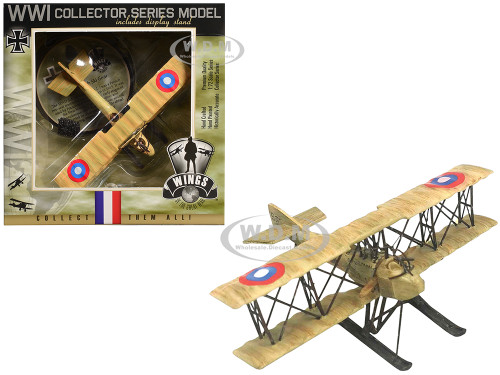
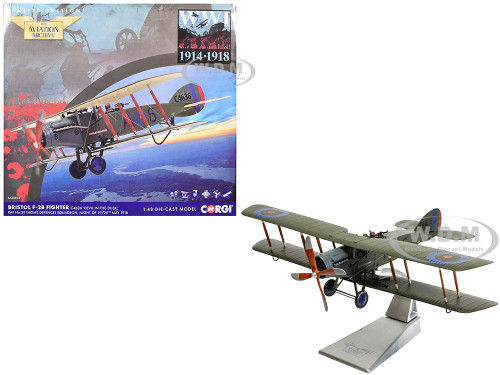
World War I also transformed aviation. At the beginning of the war, airplanes were used primarily for reconnaissance and observation. As their military value became apparent, aircraft were increasingly adapted for aerial combat, bombing, ground attack, and specialized missions.
The resulting aircraft are among the most recognizable subjects in World War I aircraft models.
Allied Aircraft
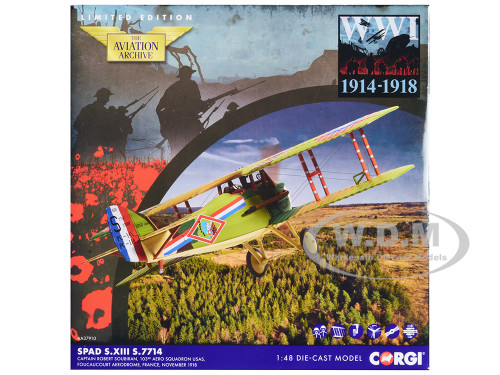
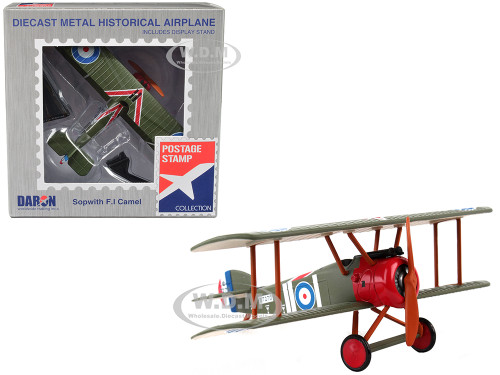
British and French aircraft became famous for their roles in reconnaissance and aerial combat. Notable subjects include the Sopwith Camel, Royal Aircraft Factory S.E.5a, and SPAD XIII.
The Sopwith Camel became one of the most famous Allied fighters of the war. Its maneuverability made it an important air-combat aircraft, although it was demanding to fly.
The S.E.5a offered a different combination of speed, stability, and firepower. French aircraft such as the SPAD XIII became equally important on the Western Front and were flown by numerous Allied pilots.
Other Allied aircraft associated with World War I include:
- Sopwith Pup
- Sopwith Triplane
- Sopwith Camel
- Royal Aircraft Factory S.E.5 and S.E.5a
- SPAD VII
- SPAD XIII
- Nieuport fighters
- Airco DH.4
- Airco DH.9
- Handley Page aircraft
German Aircraft
German aviation produced some of the most recognizable aircraft of the period. The Fokker Dr.I triplane is particularly famous because of its association with Manfred von Richthofen, better known as the Red Baron.
Other German aircraft represented in World War I collections include:
- Fokker Eindecker
- Fokker Dr.I
- Fokker D.VII
- Albatros D.III
- Albatros D.V
- Pfalz fighters
- Gotha bombers
- Zeppelin airships
The Fokker D.VII was especially significant during the final stage of the war and became one of Germany's best-known fighters.
Early Military Aviation and the Air War
World War I was the first major conflict in which aviation became an integral part of military operations. Aircraft performed reconnaissance missions over enemy positions, directed artillery fire, attacked ground targets, escorted other aircraft, and conducted bombing missions.
The development of fighter aircraft was closely connected to the need to protect reconnaissance aircraft and prevent the opposing side from gathering information. This contributed to the emergence of specialized fighter aircraft and the concept of aerial combat between opposing pilots.
Collectors can therefore build displays around different aspects of the air war rather than concentrating exclusively on famous fighters. A reconnaissance aircraft, fighter, bomber, and ground vehicle together can provide a broader representation of the technology used during the conflict.
Military Trucks and Transportation
World War I was also an important period in the development of motorized military transportation. Trucks increasingly supplemented horses for moving troops, ammunition, fuel, food, and other supplies.
The American Liberty truck, developed during the later part of the war, is an important example of an early standardized military truck. British, French, and German forces also operated a wide variety of commercial and purpose-built trucks.
These vehicles may not be as immediately recognizable as tanks or fighter aircraft, but they are valuable subjects for collectors interested in the logistical side of World War I.
Military transportation models can help create displays featuring:
- Supply convoys
- Artillery support
- Ammunition transport
- Troop transportation
- Airfield logistics
- Repair and maintenance operations
- Rear-area military activity
Combining transportation models with armored vehicles and aircraft can make a World War I collection more representative of the enormous logistical effort required to sustain armies in the field.
Artillery, Trains, and Other Military Equipment
Artillery was central to World War I warfare. Heavy guns, field artillery, howitzers, and specialized artillery equipment were used extensively throughout the conflict.
Railways were also critically important for moving troops, ammunition, supplies, and heavy equipment. Military rail transportation connected rear areas with the front and supported the enormous scale of industrial warfare.
Depending on the models available, collectors may find additional World War I subjects such as artillery pieces, military trains, motorcycles, staff cars, ambulances, and other support equipment.
These subjects are useful for collectors who want to move beyond the most famous tanks and aircraft and create a more complete historical display.
Collecting World War I Diecast Models
World War I military models offer several different approaches to collecting.
Collect by Nation
A collection can focus on one country's equipment, such as British, French, German, American, or Austro-Hungarian subjects. This makes it possible to explore the different approaches each military took to aviation, armored vehicles, transportation, and logistics.
Collect by Technology
Another approach is to follow the development of military technology from 1914 through 1918. Early armored cars and reconnaissance aircraft can be displayed alongside later tanks and fighters to illustrate the rapid development of mechanized warfare.
Collect Famous Aircraft
Aviation collectors may choose iconic aircraft such as the Fokker Dr.I, Fokker D.VII, Sopwith Camel, S.E.5a, and SPAD XIII. Pilot markings, squadron colors, and aircraft configurations can add additional interest when available on individual models.
Build a Battlefield Display
A combination of tanks, armored cars, trucks, artillery, and aircraft can create a World War I battlefield or military-camp scene. Because the conflict combined traditional and mechanized warfare, a display can include both motorized vehicles and equipment representing older forms of military transportation.
Choosing a Scale
Scale is an important consideration when building a collection of World War I diecast models. Aircraft and vehicles are produced in a variety of scales, and the ideal choice depends on the size of the subject and the available display space.
Common military vehicle scales include 1/18, 1/24, 1/32, 1/35, 1/43, 1/48, 1/50, and 1/64. World War I aircraft can also be found in scales such as 1/48, 1/72, 1/100, 1/144, 1/200, and 1/400, depending on the subject and manufacturer.
Larger scales generally make it easier to appreciate details such as rivets, weapons, tracks, wheels, cockpit features, and markings. Smaller scales are useful for collectors who want to represent several vehicles or aircraft within a compact display.
When combining different types of models, check the stated scale of each piece rather than assuming that similarly sized models represent the same real-world proportions.
World War I Models for Historical Collections
The First World War occupies a unique position in military history because it sits at the intersection of traditional warfare and modern mechanized conflict. Tanks were introduced, aircraft became essential military tools, trucks expanded the possibilities of logistics, and armored vehicles became increasingly important.
That combination makes World War I diecast models appealing to military collectors, aviation enthusiasts, history enthusiasts, and anyone interested in the origins of modern military technology.
Browse the World War I collection at DiecastModelsWholesale.com to explore military vehicles, aircraft, and other historical subjects from the 1914–1918 era and find models that add an important chapter of military history to your collection.



 $49.99