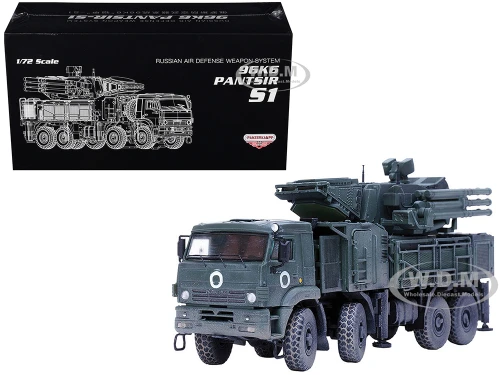
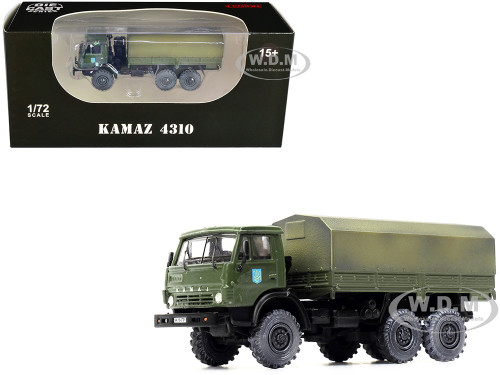
The Russo-Ukrainian War category features military diecast models representing the equipment, vehicles, aircraft, and other subjects associated with the ongoing conflict between Russia and Ukraine. For collectors, this category provides an opportunity to explore a rapidly evolving period of military history through scale models of Ukrainian, Russian, and internationally supplied equipment.
The Russo-Ukrainian War is a broad historical period rather than a single campaign. Russia's military intervention in Ukraine began in 2014 with the annexation of Crimea and the outbreak of fighting in the Donbas. The conflict expanded dramatically on February 24, 2022, when Russia launched a full-scale invasion of Ukraine. Fighting has subsequently involved conventional armored warfare, artillery, air defense, drones, missiles, electronic warfare, logistics, and increasingly sophisticated unmanned systems.
Because the conflict has involved equipment from multiple generations and countries, it offers an unusually diverse range of subjects for military model collectors. Soviet-era designs such as the T-64, T-72, and T-80 appear alongside modern Ukrainian developments and equipment supplied by NATO countries and other international partners.
Russo-Ukrainian War History
The origins of the modern conflict date to 2014, when Russia occupied and annexed Crimea and armed conflict developed in the Donetsk and Luhansk regions of eastern Ukraine. Ukrainian government forces fought Russian-backed separatist formations in the Donbas for several years, with periods of intense fighting separated by ceasefires and diplomatic efforts.
The conflict changed fundamentally in February 2022. Russian forces launched a full-scale invasion from multiple directions, including from territory in Russia and Belarus and from the Black Sea. Ukrainian forces resisted the initial offensive, and Russian forces subsequently concentrated substantial military activity in eastern and southern Ukraine.
The war has continued to evolve, with major operations involving armored vehicles, artillery, long-range missiles, air defense, drones, and fortified positions. The extensive international military assistance provided to Ukraine has also introduced Western-designed systems into a battlefield previously dominated by Soviet- and Russian-derived equipment.
For collectors, this means that a Russo-Ukrainian War military collection can include equipment from several distinct technological traditions.
Ukrainian Military Diecast Models
Ukraine inherited a large inventory of Soviet-designed military equipment following the dissolution of the Soviet Union in 1991. Ukraine also developed a substantial domestic defense industry, resulting in upgraded Soviet platforms and indigenous designs.
Important Ukrainian military subjects include:
- T-64 main battle tanks
- T-72 and upgraded variants
- T-80 tanks
- T-84 and T-84 Oplot
- BMP infantry fighting vehicles
- BTR armored personnel carriers
- BRDM reconnaissance vehicles
- Bohdana self-propelled artillery
- Kozak and other Ukrainian armored vehicles
- Various military trucks and support vehicles
The T-64 has particular importance in Ukrainian military history. Developed during the Soviet period, the T-64 was manufactured in Ukraine and became one of the country's principal armored platforms. Ukrainian forces have extensively modernized and adapted T-64 variants over the course of the conflict.
The T-84 represents another important Ukrainian subject. Developed from the T-80UD family, it demonstrates Ukraine's continued ability to develop and upgrade armored vehicles using its own engineering and industrial capabilities.
Western Equipment Supplied to Ukraine
One of the defining characteristics of the post-2022 conflict has been the arrival of military equipment from numerous countries. Western assistance has introduced vehicles, artillery systems, air-defense platforms, and aircraft that differ substantially from Ukraine's Soviet-era inventory.
Notable equipment supplied to Ukraine includes:
- M1 Abrams main battle tanks
- Leopard 1 and Leopard 2 tanks
- Challenger 2 tanks
- M2 Bradley infantry fighting vehicles
- M113 armored personnel carriers
- CV90 infantry fighting vehicles
- Stryker armored vehicles
- MRAP protected vehicles
- M777 howitzers
- PzH 2000 self-propelled artillery
- CAESAR artillery systems
- HIMARS and related rocket artillery systems
- Western air-defense systems and support vehicles
These vehicles make particularly interesting additions to collections because they can be displayed alongside Ukrainian-operated Soviet-designed equipment, illustrating the changing composition of Ukraine's armed forces.
Russian Military Equipment
Russian forces entered the full-scale invasion with a mixture of modernized Soviet designs and newer Russian-developed systems. Many recognizable vehicles are developments of Cold War platforms, while others incorporate more recent armor, sensors, communications, and fire-control technology.
Russian military subjects associated with the conflict include:
- T-72 main battle tanks
- T-80 tanks
- T-90 tanks
- T-62 tanks
- BMP-1 and BMP-2 infantry fighting vehicles
- BMP-3
- BTR armored personnel carriers
- BMD airborne combat vehicles
- Tornado and other artillery and rocket systems
- KamAZ and other military trucks
- Ural military vehicles
The T-72 remains one of the most recognizable armored vehicles of the conflict. Although originally designed during the Soviet era, numerous generations and modernization programs have kept the platform in service.
The T-80 is another important subject, while the T-90 represents a later development of the Soviet/Russian tank lineage. Different variants can be particularly interesting to collectors who focus on identifying changes in armor, optics, turrets, and other equipment.
Aircraft of the Russo-Ukrainian War
Military aviation has remained an important part of the conflict, although the extensive presence of surface-to-air missile systems has significantly affected how combat aircraft are employed.
Ukrainian-operated aircraft include:
- MiG-29 fighters
- Su-27 fighters
- Su-24 strike aircraft
- Su-25 attack aircraft
- F-16 Fighting Falcon
- Mi-8 helicopters
- Mi-24 helicopters
Ukraine's Soviet-era MiG-29 and Su-27 fighters have remained important components of its air force. The arrival of F-16 Fighting Falcons represents a major transition toward Western-designed combat aviation.
Russian forces have operated aircraft including:
- Su-27
- Su-30
- Su-34
- Su-35
- Su-25
- MiG-29
- MiG-31
- Ka-52
- Mi-8
- Mi-24
- Mi-28
The Su-34 is especially recognizable as a modern Russian strike aircraft, while the Ka-52 attack helicopter has become another prominent aviation subject associated with the conflict.
For aircraft collectors, this combination of Soviet-derived and modern Western aircraft makes the Russo-Ukrainian War a particularly interesting subject for comparative displays.
Drones and Modern Battlefield Technology
Unmanned aircraft have become one of the most visible technological features of the conflict. Ukraine and Russia have both employed drones for reconnaissance, artillery observation, surveillance, and attack missions.
The Ukrainian Bayraktar TB2 became internationally recognizable during the early stages of the full-scale war. Other unmanned systems, including small commercial-style drones and larger reconnaissance platforms, have also demonstrated how inexpensive or relatively small systems can influence battlefield operations.
The conflict has also highlighted the growing importance of:
- Electronic warfare
- Counter-drone systems
- Satellite communications
- Thermal imaging
- Precision-guided weapons
- Long-range artillery
- Air-defense systems
- Unmanned reconnaissance
- Remote-controlled and autonomous systems
For collectors, these technologies broaden the definition of a modern military collection beyond traditional tanks and aircraft.
Artillery, Logistics, and Support Vehicles
Artillery has played a major role throughout the Russo-Ukrainian War. Towed guns, self-propelled artillery, multiple-launch rocket systems, ammunition carriers, fuel trucks, recovery vehicles, and engineering equipment are all important components of military operations.
Vehicles such as the HIMARS, M777, PzH 2000, CAESAR, and Bohdana illustrate the variety of artillery systems involved. Soviet- and Russian-designed artillery systems have operated alongside Western systems, creating another striking contrast for military displays.
Logistics vehicles are equally important. Armies require large numbers of trucks and support vehicles to move ammunition, fuel, food, spare parts, and personnel. Collectors interested in creating realistic military scenes can combine combat vehicles with transport and recovery equipment to show the broader infrastructure behind frontline operations.
Collecting Russo-Ukrainian War Diecast Models
A Russo-Ukrainian War collection can be organized around a particular country, vehicle type, military branch, or period of the conflict.
Ukrainian and Russian Equipment
Collectors may choose to focus on Ukrainian-operated equipment, Russian military equipment, or both. A comparative display featuring a Ukrainian T-64 or T-84 alongside Russian T-72, T-80, or T-90 variants can illustrate the shared Soviet design heritage and the subsequent evolution of the two countries' military equipment.
Western and International Equipment
Another approach is to collect Western vehicles supplied to Ukraine. Abrams, Leopard, Challenger 2, Bradley, Stryker, and other international platforms can be displayed alongside Ukrainian-designed and Soviet-derived equipment.
This creates a collection that reflects one of the most distinctive aspects of the conflict: the combination of equipment from different generations, nations, and design philosophies operating within the same theater.
Scale Selection
Military diecast models are produced in a wide range of scales. Ground vehicles may be available in 1/18, 1/24, 1/32, 1/35, 1/43, 1/48, 1/50, and 1/64, depending on the subject and manufacturer.
Aircraft are commonly represented in scales such as 1/48, 1/72, 1/100, 1/144, 1/200, and 1/400.
Larger scales are useful when individual vehicle details, markings, armor features, wheels, weapons, and equipment are important to the display. Smaller scales make it easier to build larger formations or combine multiple aircraft and vehicles in a single scene.
Building a Russo-Ukrainian War Display
A display can focus on a particular period, such as the fighting in Donbas before 2022 or the full-scale invasion beginning in February 2022. Another approach is to organize models by equipment type, placing tanks, infantry fighting vehicles, artillery, aircraft, helicopters, and logistics vehicles together.
Collectors can also create a display showing the technological transition from Soviet-era equipment to modern Western platforms. A T-64, T-72, or T-80 can be displayed alongside a Leopard 2, M1 Abrams, Bradley, or HIMARS to highlight the extraordinary variety of military hardware associated with the conflict.
For additional military subjects from other countries and conflicts, explore the broader Military collection.
Shop Russo-Ukrainian War Diecast Models
The Russo-Ukrainian War represents a significant chapter in contemporary military history and offers collectors an unusually broad range of subjects. From Ukrainian T-64 and T-84 tanks and Russian T-72 and T-90 variants to Abrams, Leopard, Bradley, HIMARS, MiG-29, Su-34, Ka-52, and F-16 models, the equipment associated with the conflict reflects both decades of military development and rapidly emerging technologies.
Browse the Russo-Ukrainian War diecast models at DiecastModelsWholesale.com to find military scale models that match your collecting interests and build a display representing the vehicles, aircraft, and technology of this important modern conflict.